

Roman laws have revealed how the army transported animals to the amphitheatres


Two late Roman decrees helped to re-establish the system for transporting wild animals to the spectacles. The military were involved in this, and the provinces were responsible for covering the transport costs.
Two imperial decrees from the late Roman Empire helped the researcher Rosa María Carreño Sánchez to reconstruct the system that organised spectacles featuring wild animals. The military were involved in the capture, guarding and transport of the animals, whilst part of the costs were borne by provincial towns.
The study was published in 2026 in the Spanish journal *Revista General de Derecho Romano*. It describes the legal and administrative mechanisms of *venatio* — hunts and spectacles featuring animals in Roman amphitheatres.
Details
The study is based on two imperial constitutions from section 15.11 of the Codex Theodosianus. These provisions were later incorporated, in a revised form, into the Codex Justinianus.
According to Carrero Sánchez’s analysis, the imperial authorities strictly controlled the handling of exotic animals. Sources point to a possible state monopoly on the capture of lions: this may have ensured a supply of animals for the emperor’s spectacles and limited competition from private organisers.
Specialised military personnel and officials, referred to in the sources as ad leones, ursuarii and vestigiatores, were employed to search for, capture and guard the animals. The provinces were required, at their own expense, to provide personnel for the onward transport of the animals to the capital or the imperial menageries.
Such a system created opportunities for abuse. Unjustified delays increased the cities’ expenses and could conceal the use of animals in unauthorised private spectacles. Military commanders faced heavy fines in gold for any breaches.
Why this is important
Roman spectacles involving animals are usually known for their scenes in the arena. Legal documents reveal a less visible side of these spectacles: the workings of the army, logistics, provincial expenditure, territorial conflicts and control by the imperial administration.
However, the study has a limitation: it analyses legislative texts which primarily show how the state intended to regulate the system. On the basis of these two edicts, it is not possible to determine the exact scale of transport operations or to ascertain the extent to which the rules were uniformly observed across all parts of the empire. The author herself therefore refers to a possible, rather than definitively proven, monopoly on lions.
Source
Rosa María Carreño Sánchez. De venatione ferarum (CTh. 15.11): Legal aspects of the capture and transport of exotic animals for public spectacles. Revista General de Derecho Romano, No. 46, 2026, ISSN 1697-3046. Research record and abstract on Dialnet. Further information: official press release from Carlos III University.
An independent researcher, interested in archaeology and sacred geography. He researches them and writes about them.
Related news
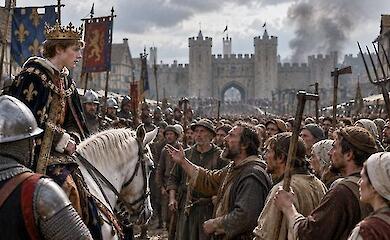
The 1381 Uprising: why the rebels declared their loyalty to the king

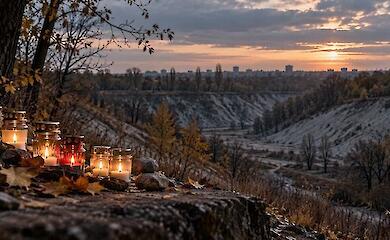
Babi Yar: what happened 85 years ago and how the memory of the victims has been preserved

This 1834 six-penny coin was probably deformed during the minting process
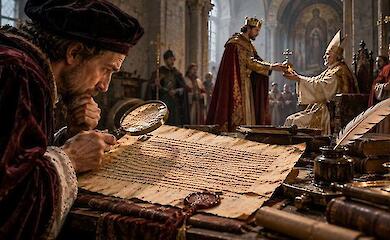
How ‘Konstantinov Dar’ was passed off as an imperial decree for centuries

Popular news

Scientists have identified which childhood experiences are linked to happiness in adulthood
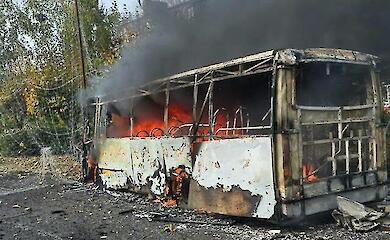
Russian forces struck a public bus in Kramatorsk: 30 dead and 18 injured

Marfan syndrome has been confirmed at the molecular level in domestic cats for the first time
A Russian drone struck the South Bridge in Kyiv: metro services have been suspended

News about war

Russia is plotting to assassinate the heads of European defence firms in order to undermine support for Ukraine — FT
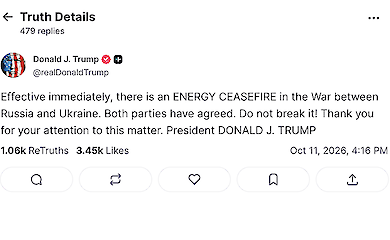
Trump announced an energy truce between Ukraine and Russia. A similar statement was made a month ago
Russian forces struck a public bus in Kramatorsk: 30 dead and 18 injured
The death toll in Pryluky following the Russian missile strike has now risen to 22, including five children