

Rare 1,200-year-old jewellery made from wallaby teeth has been discovered in Australia


At the Windmill Way rock shelter on the Cape York Peninsula, archaeologists found 12 wallaby incisors with lumps of plant resin. Direct dating has shown them to be approximately 1,100–1,300 years old. It is likely to have been part of a necklace or headband, but the artefact itself has not survived.
At the Windmill Way rock shelter on the Cape York Peninsula, archaeologists have discovered 12 wallaby incisors with lumps of plant resin on their roots. Direct dating of the resin on two teeth revealed that the finds are approximately 1,100–1,300 years old.
The authors of the study believe that the teeth were attached to a plant fibre and worn as a necklace or headband. As the artefact itself has not survived, its appearance and purpose remain a well-founded, yet still an interpretation.
Details
Windmill Way is situated in the Quincan region in the north-east of the state of Queensland. This is the first known archaeological discovery of what are believed to be wallaby-tooth ornaments on the Cape York Peninsula and a rare example for Australia, found outside a burial context.
Ten teeth still bear visible resin beads, whilst two others show only traces of resin. Eleven incisors were identified as belonging to three local wallaby species; the twelfth likely belonged to one of them. The resin on two teeth was dated using radiocarbon dating: both results place them at approximately 1,100–1,300 years ago. The remaining ten finds were not directly dated.
The researchers compiled a list of probable plant species with the help of elders and rangers from the Laura community, and verified the composition of the resin using infrared spectroscopy and mass spectrometry. Substances characteristic of the resin of Xanthorrhoea — the Australian ‘grass tree’ — were found in all samples. Traces of resin from the Cooktown ironwood were also detected on one tooth. This could have been the result of repair, reuse or a mixture of the two materials.
In the region, kangaroo and wallaby teeth were used as scrapers, chisels and drills. However, the finds from Windmill Way show no characteristic marks of such use, and the teeth themselves are not drilled. Instead, plant fibres were preserved alongside the resin on five of them, and a fragment of hide or skin on one. More than 500 scraps of plant cord had previously been found in the shelter itself.
Researchers suggest that the small resin beads acted as stops, preventing the teeth from slipping off the thread. In this way, they could have been attached to a necklace or headband. However, the cultural layer of the shelter has been disturbed, the thread has not survived, and all 12 teeth could have belonged to either a single artefact or to several.
Why this is important
Artefacts made of wood, fibres, leather and plant resin are much less likely to survive than stone or bone. Such finds therefore help to reveal a part of the material culture of Australia’s Indigenous peoples that is usually almost entirely absent from the archaeological record.
These are not the oldest tooth ornaments found in Australia: older examples are known from burials in the south-east of the continent. The novelty of this discovery lies in its location and context. Previously, such artefacts had not been found on Cape York, and the resin on the teeth has been dated directly, rather than by the age of the burial or the surrounding stratum.
The study also shows that chemical analysis can reveal traces of resin that are almost invisible to the naked eye. This gives archaeologists reason to re-examine animal teeth from other excavations, which may previously have been mistaken for ordinary food remains.
Source
- Lynley A. Wallis et al., ‘An assemblage of resin-mounted macropod incisors from Quinkan Country, Cape York Peninsula, Queensland’, *Australian Archaeology*, published online on 14 August 2026. DOI: 10.1080/03122417.2026.2694015.
- Sandee Oster, ‘Resin-mounted wallaby teeth reveal rare 1,200-year-old ornaments in Queensland’, Phys.org, 1 September 2026.
An independent researcher, interested in archaeology and sacred geography. He researches them and writes about them.
Related news
The letters have shed light on the role of Baghdad’s merchants in the history of ancient Kish

Bones from ancient dwellings have revealed evidence of violence in Scandinavia


Egypt is set to send the Fayum portraits abroad for the first time: 6 facts
Coca leaves have been found in Peru alongside sacrificed llamas
Popular news

Scientists have identified which childhood experiences are linked to happiness in adulthood

Russian forces struck a public bus in Kramatorsk: 30 dead and 18 injured


A Russian drone struck the South Bridge in Kyiv: metro services have been suspended

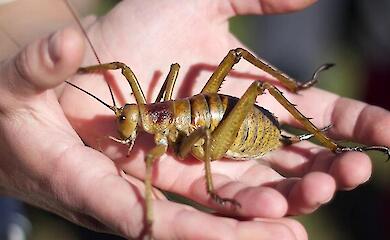
New Zealand has successfully restored populations of the country’s heaviest insect
News about war

‘There has been significant damage to energy infrastructure following attacks by the Russian Federation’ – Zelenskyy

Russia has launched a ballistic missile strike on Kyiv: a residential building has been hit, and there are casualties and injured people

Russian ballistic missile strike on a thermal power station in Kyiv: what is known

Russia is plotting to assassinate the heads of European defence firms in order to undermine support for Ukraine — FT