

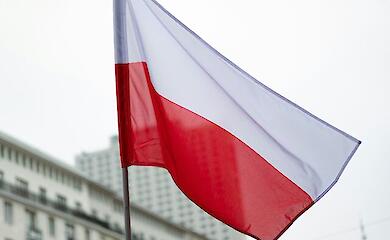
Poland has increased its defence spending to $53 billion against the backdrop of a record budget deficit


Warsaw is ramping up domestic arms production and signing new defence contracts. Meanwhile, Moody’s expects the deficit to remain at around 7 per cent of GDP and public debt to rise to 68.9 per cent of GDP by 2027.
Poland has sharply increased its military spending following the outbreak of Russia’s full-scale war against Ukraine. In 2026, Warsaw is allocating around $53 billion to defence – 4.8 per cent of GDP – whilst the growth in the defence budget is simultaneously supporting the development of national industry and placing a greater strain on public finances. This is reported by The Guardian.
Since 2022, the share of Poland’s defence spending in the economy has more than doubled – from 2.2 per cent to 4.8 per cent of GDP. In monetary terms, the current military budget stands at around $53 billion, making it the fourth largest in the European Union after Germany, France and Italy.
From arms imports to domestic production
Warsaw is seeking to use this large-scale rearmament not only to strengthen its armed forces, but also to develop Polish industry. The country is gradually increasing domestic arms production by entering into partnerships with international defence companies.
In particular, the British firm BAE Systems is collaborating with the Polish state-owned group PGZ on a project for a new munitions factory. By 2028, Poland plans to establish three new munitions production facilities. According to The Guardian, production of 155-mm artillery shells is set to rise from 5,000 in 2023 to 30,000 in 2026, and then to 200,000 per year over the following two years.
Another example is the MBDA Polska plant in Czosnów, near Warsaw. According to the company’s managing director, Jim Price, Poland is shifting from predominantly importing weapons to manufacturing them domestically, which is creating new production capacity and jobs, the publication reports.
But the military boom is taking a heavy toll on the budget
This accelerated rearmament is taking place against the backdrop of an already high public finance deficit. According to a forecast cited by The Guardian, Poland’s deficit could reach 7.1 per cent of GDP in 2027 – one of the highest figures in the European Union. Reuters also reported on the Polish government’s forecast of a deficit of 7.1 per cent of GDP in 2027 and linked this, in particular, to record deliveries of military equipment.
Public debt servicing is creating additional pressure. On 18 September, Moody’s downgraded Poland’s long-term sovereign rating from A2 to A3, changing the outlook from negative to stable. The agency attributed the decision to a sustained deterioration in public finances, a large deficit and rising interest expenditure.
Moody’s expects Poland’s general government deficit to remain at around 7 per cent of GDP in 2026 and 2027. According to the agency’s estimates, public debt could rise from 59.7 per cent of GDP in 2025 to 68.9 per cent in 2027. Among the factors that will hinder deficit reduction, Moody’s cites high expenditure on defence, healthcare, public investment and social commitments.
Poland is banking on its defence industry
That said, the impact of military spending on the Polish economy is mixed. On the one hand, large-scale orders stimulate the creation of manufacturing facilities, attract international companies and boost employment in the defence sector. Poland also intends to channel a significant portion of European funding into the development of its own defence industry.
On the other hand, as the publication notes, such rapid growth in expenditure increases the strain on the budget. Leszek Konsek, an economist at ING Bank, considers Poland’s current budgetary trajectory to be unsustainable and raises the question of whether the country will be able, in the long term, to maintain both high growth rates and such a high level of public spending.
For Poland, the issue is particularly sensitive due to its position on NATO’s eastern flank and its proximity to Ukraine. Experts note that Warsaw is therefore simultaneously building up its military capabilities, expanding its own arms production and attempting to maintain the stability of public finances.
Elena Rasenko writes about science, healthy living and psychology news, and shares her work-life balance tips and tricks.
Related news

Ukraine’s 2027 national budget — what will spending be on defence, pensions, wages and healthcare?


Poland is changing its entry rules: what documents you may need at the border


Spending the winter and earning a living: a new influx of Ukrainians has been observed in Poland

The government is cutting back on non-priority spending: what will be funded and what will be put on hold

Popular news

Genetic evidence of natural selection has been found in dogs near the Chernobyl Nuclear Power Station



A fish with a transparent head was filmed in 4K at a depth of 600 metres


News about war

Russia is threatening to destroy bridges, ports and power stations in Ukraine in order to secure territorial concessions from Kyiv – FT

Emergency power cuts have been introduced in Kyiv and warming centres are being set up — Klitschko


Zelenskyy confirmed that the Russian warning system had been hacked: Ukraine has responded to the Russian Federation’s cyberattack

Stephen Hubbard has returned to the US after four years in prison in Russia: what is known about his case