

PACE did not recognize the new Russian State Duma as legitimate


The Parliamentary Assembly of the Council of Europe has adopted a resolution following the Russian parliamentary elections. PACE stated that the new State Duma cannot be regarded as a democratically elected or legitimate representative body, partly because voting took place in the occupied territories of Ukraine.
On 30 September, the Parliamentary Assembly of the Council of Europe adopted a resolution on the Russian parliamentary elections held on 18–20 September. In the document, PACE concluded that the vote did not meet the fundamental conditions for free and fair elections, and that its results cannot be regarded as a genuine expression of the will of the Russian people.
This was also reported by ‘Babel’.
According to the adopted position, the new composition of the State Duma of the Russian Federation should not be regarded as democratically elected or as a legitimate representative body of Russian society. According to Yevheniia Kravchuk, a member of the Ukrainian delegation to PACE, 59 members voted in favour of the draft resolution; there were no votes against and no abstentions.
Prior to the adoption of the resolution, the PACE Platform for Dialogue with Russian Democratic Forces had already stated that the elections took place in an environment characterised by a lack of genuine political competition, the persecution of the opposition and independent media, and the criminalisation of anti-war statements.
Separately, PACE highlighted the voting in the occupied territories of Ukraine
One of the key reasons for not recognising the results was Russia’s conduct of elections in the temporarily occupied Ukrainian territories.
PACE noted that voting took place, in particular, in Crimea and Sevastopol, as well as in the occupied parts of the Donetsk, Luhansk, Zaporizhzhia and Kherson regions. The Assembly considers this to be a violation of Ukraine’s sovereignty and territorial integrity, as well as of international law.
The resolution also emphasises that the occupation is temporary in nature and does not confer sovereignty over the territory on the occupying state. According to Kravchuk, a provision was specifically included in the document stating that people’s participation in voting under conditions of occupation, pressure or coercion cannot be interpreted as a free expression of political will.
What measures does PACE propose?
The Assembly has called on Council of Europe member states and international partners not to recognise the legal and political consequences of the Russian vote in the occupied territory of Ukraine.
The proposals also include:
restricting official engagement with the new State Duma;
to continue the political and diplomatic isolation of the Russian authorities;
imposing sanctions against members of the Central Election Commission of the Russian Federation, regional election commissions and individuals involved in organising the vote in the occupied territories;
imposing sanctions on individuals who stood as candidates or participated in such elections as so-called international observers.
PACE also expressed concern at the participation of citizens of Council of Europe member states as observers in elections organised by Russia in the occupied territories of Ukraine.
What the PACE decision means
Resolutions of the Parliamentary Assembly of the Council of Europe are not court rulings and do not, in themselves, invalidate Russian legislation or the mandates of State Duma deputies within the Russian Federation.
The document sets out the Assembly’s political and legal position and contains recommendations to the member states of the Council of Europe regarding relations with the Russian parliament and those involved in organising the vote.
It is therefore more accurate to speak not of a formal ‘dissolution’ or legal termination of the State Duma’s powers, but rather of PACE’s refusal to recognise its new composition as a democratically elected and legitimate representative body.
Why this is important
The resolution extends the policy of non-recognition of the results of Russian elections held in the occupied territories of Ukraine.
Even before the vote, PACE had stated that holding elections on Ukrainian territory could not create legal consequences for Russia or alter the internationally recognised status of these territories.
The Assembly has now extended this approach to the new State Duma as a whole and has called on countries to limit official contacts with it and to consider sanctions against the organisers of the vote.
Source
Mykola Potyka has a wide range of knowledge and skills in several fields. Mykola writes interestingly about things that interest him.
Related news
"These aren’t just statistics – they represent the suffering of millions of people!" – Yushchenko reminded Trump of the US’s commitments to Ukraine

Russia is plotting to assassinate the heads of European defence firms in order to undermine support for Ukraine — FT

Trump announced an energy truce between Ukraine and Russia. A similar statement was made a month ago

Germany proposes speeding up Ukraine’s accession to the EU through the associate membership scheme

Popular news

Scientists have identified which childhood experiences are linked to happiness in adulthood

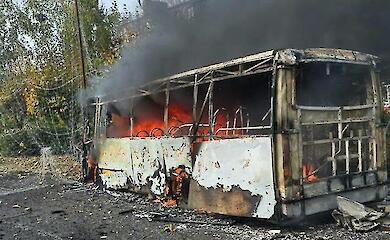
Russian forces struck a public bus in Kramatorsk: 30 dead and 18 injured
A Russian drone struck the South Bridge in Kyiv: metro services have been suspended

New Zealand has successfully restored populations of the country’s heaviest insect
News about war
‘There has been significant damage to energy infrastructure following attacks by the Russian Federation’ – Zelenskyy
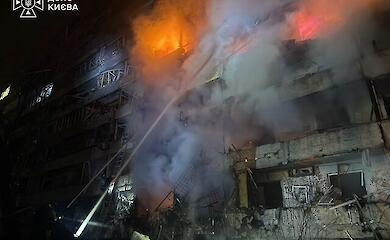
Russia has launched a ballistic missile strike on Kyiv: a residential building has been hit, and there are casualties and injured people
Russian ballistic missile strike on a thermal power station in Kyiv: what is known
Russia is plotting to assassinate the heads of European defence firms in order to undermine support for Ukraine — FT