


Our ancestors may have lived in pairs as far back as the time of the dinosaurs: scientists have revised the history of mammals


The earliest placental mammals may have been far more social than previously thought. A phylogenetic model has shown that their common ancestor was largely solitary, but living in pairs was already part of its potential social repertoire.
The distant common ancestor of placental mammals — a group that includes humans, dogs, whales, elephants and most modern mammals — was probably not a strict solitary creature. A new study suggests that as far back as the age of the dinosaurs, part of its social repertoire may have included adult males and females living in pairs.
Important: scientists have not found a fossilised ‘family’ of ancient mammals. Behaviour is rarely preserved in the palaeontological record, so the conclusion was reached through statistical reconstruction based on data about modern species and their evolutionary relationships.
Details
The team led by Sam Walmsley and Carsten Schradin examined more than 14,000 peer-reviewed publications on the social organisation of extant placental mammals. The researchers looked for data on whether the animals live predominantly alone, in pairs or in groups.
Of the 5,390 extant placental species, suitable field data were found for 726 species and 1,473 populations. Of these populations, 353 were predominantly solitary, 250 lived in pairs, and 870 in groups.
Another important finding is that social behaviour within a single species often does not fit neatly into a single rigid category. Different patterns of social organisation were observed in 367 species – or 51 per cent of the species studied – and in 583 populations.
The authors then used a Bayesian phylogenetic model, which takes into account the relationships between species and the variations within a single species. The model showed that the common ancestor of placental mammals was predominantly solitary, but not exclusively so: pair living accounted for around 26% of the reconstructed social status.
However, ‘living in pairs’ does not automatically imply lifelong sexual monogamy. The study focuses primarily on social organisation — the cohabitation of an adult male and female; mating systems, the stability of bonds and parental behaviour are separate characteristics.
Why this is important
For a long time, research into social evolution was based on the assumption that early placental mammals were solitary, and that life in pairs emerged later. This new reconstruction shifts the point of reference: living in pairs may have been an ancient form of behaviour, whilst the origin of large mixed-species groups becomes a more interesting evolutionary question.
However, the results should not be interpreted as a direct description of the life of a specific animal 100–160 million years ago. This is a model-based reconstruction based on modern species. Data could only be gathered for 726 out of 5,390 extant placental mammals — approximately 13 per cent of species — and well-studied animals are represented unevenly in the literature.
Therefore, whilst the study reliably demonstrates that the assumption of a single ancestral species should not be taken for granted, it cannot reconstruct the specific structure of ancient families, the duration of pair bonds or the mating system.
Source
Sam F. Walmsley, Charlotte-Anaïs Olivier, Adrian V. Jaeggi, Lindelani Makuya, Jordan S. Martin, Loren D. Hayes, Carsten Schradin. Pair living emerged early in placental mammals. Proceedings of the National Academy of Sciences, 2026, 123(31), e2528458123. DOI: 10.1073/pnas.2528458123.
PubMed record: PMID 42520129.
Mykola Potyka has a wide range of knowledge and skills in several fields. Mykola writes interestingly about things that interest him.
Related news

Could meditation reveal the secret of the universe? Physicists have put forward an unexpected theory


Why other people’s music drives us mad: scientists have identified five reasons

‘Don’t get dirty!’: how adults unwittingly spoil children’s games

Eye-catching fake news on social media catches the eye more quickly, but isn’t remembered any better
Popular news

Scientists have identified which childhood experiences are linked to happiness in adulthood

Russian forces struck a public bus in Kramatorsk: 30 dead and 18 injured


A Russian drone struck the South Bridge in Kyiv: metro services have been suspended

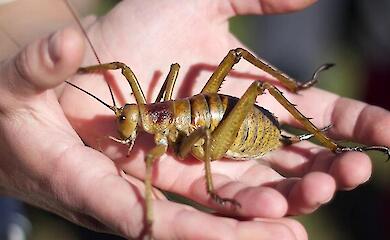
New Zealand has successfully restored populations of the country’s heaviest insect
News about war

‘There has been significant damage to energy infrastructure following attacks by the Russian Federation’ – Zelenskyy

Russia has launched a ballistic missile strike on Kyiv: a residential building has been hit, and there are casualties and injured people

Russian ballistic missile strike on a thermal power station in Kyiv: what is known

Russia is plotting to assassinate the heads of European defence firms in order to undermine support for Ukraine — FT