

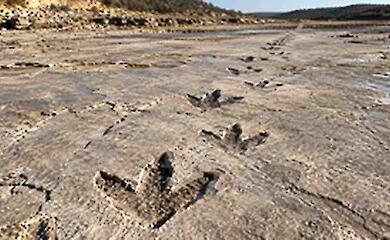
One tooth proved insufficient: scientists have proposed replacing the ‘type specimen’ of Troodon with a series of skeletons


Palaeontologists compared the bones of Troodon from the embryonic stage through to adulthood and reconstructed how the pelvis and hind limbs changed. The authors believe that this series of specimens could serve as a more reliable ‘reference standard’ for the species than a single tooth.
Palaeontologists have assembled a rare age series of Troodon formosus remains — ranging from embryos to skeletally mature individuals — and demonstrated how the pelvis and hind limbs of this bird-like dinosaur changed as the animals grew. The study by David Warrickio of Montana State University and Heath Caldwell of North Carolina State University has been published in PLOS One.
The most significant finding of the study concerns not only the dinosaur’s growth, but also its name. The authors propose replacing the current type specimen of Troodon formosus — a single tooth — with a set of more informative bones from juvenile and adult animals. However, this is currently only a proposal: the final decision rests with the International Commission on Zoological Nomenclature.
Details
The researchers studied pelvic bones and hind limbs found in western Montana within the Two Medicine Formation. Around 75–78 million years ago, this area was a coastal plain. The remains are attributed to Troodon formosus and are sequenced as a series of developmental stages—from embryonic to adult.
Importantly, the scientists are not tracking the growth of a single animal. Instead, they are comparing different individuals of varying ages and, based on this series, reconstructing typical changes over the course of a lifetime.
According to the study, the surface and shape of the bones, as well as their proportions, changed with age. For example, in adult specimens, the ratio of the length of the femur to that of the tibia was greater than in younger ones. The authors also note that certain changes appeared at similar stages of development across different specimens. They interpret this as an indication that these specific growth characteristics were relatively independent of environmental conditions.
Adult troodonts, however, varied considerably in size. Furthermore, the researchers found evidence consistent with previous studies suggesting that problems with the legs and feet were likely to have been quite common in these animals.
Troodontids were small, bird-like theropods with long legs, brains and eyes that were large in proportion to their bodies, and a plumage. It is precisely the similarities between the bones of juveniles and adults, as well as the age-related differences, that are important to palaeontologists: without such a ‘growth chart’, different developmental stages of a single species could be mistaken for different species.
Why this is important
The history of Troodon formosus has long been complicated by the fact that the species was described in the 19th century on the basis of a single tooth. Such a type specimen provides few features for comparison with more complete skeletons; consequently, the very name ‘Troodon’ and which finds should be attributed to it have remained the subject of debate for many years.
The authors of the new study believe that a set of pelvic and femur bones from juvenile and adult individuals could establish the species’ diagnostic characteristics much more clearly. If the International Commission on Zoological Nomenclature agrees to this change, it will be easier to compare future finds against a more informative reference standard.
However, the study does not automatically settle the debate. The attribution of all these remains to Troodon formosus is itself part of the taxonomic hypothesis under discussion. Furthermore, the series originates from a single region and geological interval, whilst conclusions regarding growth are based on comparisons between different individuals. Even the assumption of a relatively weak environmental influence is based on the repeatability of changes within the fossil series, rather than on direct experimentation.
According to the PLOS press release, the authors did not receive any specific project funding for this work.
Source
David J. Varricchio, Heath R. Caldwell. Pelvic and hindlimb osteology and ontogeny of a troodontid from the upper member of the Two Medicine Formation (Cretaceous) of Montana. PLOS One, 2026, 21(9): e0356249. DOI: 10.1371/journal.pone.0356249.
The official PLOS press release is available on the Scimex media service: Fossils from embryo to adult suggest how enigmatic, bird-like troodontid dinosaur grew.
Maria Grynevych, project manager, journalist, co-author of Guidebook Sacred Mountains of the Dnieper Region, Lecture Course: Cult Topography of the Middle Dnieper Region.
Related news
Europe’s first megaraptor has been identified in the museum’s collection

Fossils from China have shed light on life in the sea following the ‘Snowball Earth’ period

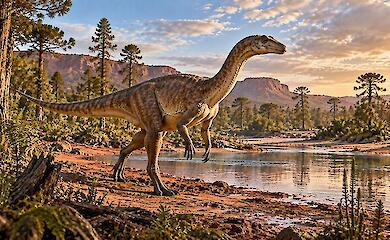
Zimbabwe’s dinosaurs differed from their neighbours in South Africa: 7 facts
Popular news

Scientists have identified which childhood experiences are linked to happiness in adulthood

Russian forces struck a public bus in Kramatorsk: 30 dead and 18 injured


A Russian drone struck the South Bridge in Kyiv: metro services have been suspended
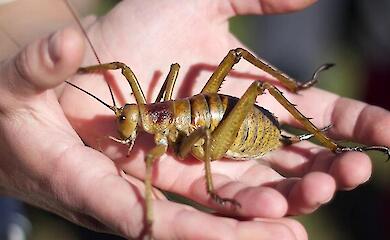
New Zealand has successfully restored populations of the country’s heaviest insect
News about war

‘There has been significant damage to energy infrastructure following attacks by the Russian Federation’ – Zelenskyy

Russia has launched a ballistic missile strike on Kyiv: a residential building has been hit, and there are casualties and injured people

Russian ballistic missile strike on a thermal power station in Kyiv: what is known

Russia is plotting to assassinate the heads of European defence firms in order to undermine support for Ukraine — FT