
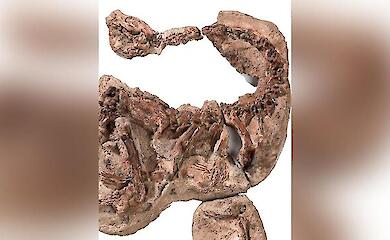

Neanderthals may have cleared their hearths: a clue has been found in ancient charcoal


Coal from the Abrik-Romani site has helped researchers put forward a hypothesis that Neanderthals cleared fire pits.
At the Abric Romaní site in Spain, archaeologists have discovered clusters of charcoal that may have been left behind after Neanderthals cleared their hearths. The authors of the study, published in the *Journal of Palaeolithic Archaeology*, tested this hypothesis based on the location and state of preservation of the finds.
Details
Tomás Fernández-Iriarte’s team examined 640 fragments from Layer Ra, excavated between 2019 and 2022. Under a microscope, they examined the structure of the wood, traces of burning and decomposition, and mineral deposits, before comparing the finds with a map of the site.
In the north, charcoal formed a large area near the hearths. Further south lay small, isolated clusters, often outside the hearths. The authors suggest that fuel remnants may have been moved there.
Around 75 per cent of the fragments were classified as belonging to the Pinus sylvestris type: this group comprises several species of pine with similar wood structure. The finds ranged in size from 3 to 13 mm. Signs of decomposition suggest that the dead wood was collected, probably from the vicinity of the settlement.
Why this is important
Such maps help to reconstruct everyday activities around the fire. However, regarding the southern clusters, the authors write: ‘their location alone is not sufficient to prove such processes’ – referring to the collection and movement of the remains.
The picture may have been influenced by water and the uneven preservation of charcoal. Manual collection may have left small fragments unnoticed. It is also as yet unknown whether the clusters relate to a single settlement or to several returns. Bones, stone tools and microscopic analysis of the deposits will help to test this hypothesis.
Source
Thomas Fernández-Iriarte et al. Spatial utilisation at Neanderthal sites: a spatial and taphonomic analysis of charcoal from the Ra layer at Abric-Romani. Journal of Palaeolithic Archaeology, vol. 9, article 32, 26 October 2026. DOI: 10.1007/s41982-026-00277-y. Published under a CC BY 4.0 licence.
This work was supported by Spanish and Catalan research programmes, the municipality of Capellades and Romanyà-Valls S.A. The authors declare that they have no conflicts of interest. This article was prompted by a news item on Phys.org.
An independent researcher, interested in archaeology and sacred geography. He researches them and writes about them.
Related news

The ‘King’ of the Iron Age may have been a woman: what ancient coins reveal


A lock from a ship that sank in 1583 was uncovered using tomography
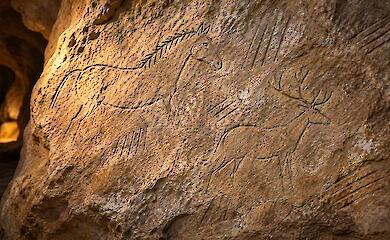
Hundreds of ancient engravings in a tourist cave in Spain had gone unnoticed for decades

Geologists have not found the source of Stonehenge’s Altar Stone in the areas of Scotland they have investigated

Popular news

Genetic evidence of natural selection has been found in dogs near the Chernobyl Nuclear Power Station



A fish with a transparent head was filmed in 4K at a depth of 600 metres


News about war

Russia is threatening to destroy bridges, ports and power stations in Ukraine in order to secure territorial concessions from Kyiv – FT


Emergency power cuts have been introduced in Kyiv and warming centres are being set up — Klitschko


Zelenskyy confirmed that the Russian warning system had been hacked: Ukraine has responded to the Russian Federation’s cyberattack

Stephen Hubbard has returned to the US after four years in prison in Russia: what is known about his case