

Melting glaciers may release ancient methane: scientists have described ‘natural fracking’


On Svalbard, meltwater from the Vallåkrabreen glacier washes geological methane out of cracks in the rock and carries it to the surface. During the 2021 melt season, researchers estimated the potential emissions from a single glacial basin at approximately one tonne of methane.
Melting glaciers may release ancient methane: scientists have described ‘natural fracking’
On Spitsbergen, meltwater from the small Vallokrabreen valley glacier washes methane out of cracks in the rock and carries it to the surface. Researchers compare this mechanism to natural ‘fracking’: the water carves a path through the fractured rock and mobilises gas that was previously trapped beneath the glacier.
During the 2021 melting season, the entire study area could have released around 1.0 tonnes of methane, with almost two-thirds of this coming from the river emerging from beneath the glacier. This is not methane produced directly beneath the ice by microbes, but primarily thermogenic gas from organically rich geological formations.
Details
The work was carried out in the central part of Svalbard. The area of the Vallokrabreen glacier itself is around 20 square kilometres, whilst the entire catchment area covers approximately 42 square kilometres. The main field observations were carried out in the summer of 2021, with researchers collecting additional samples in 2022 and 2023.
In the river draining the glacier, the concentration of dissolved methane reached 3,170 nanomoles per litre — almost 800 times higher than the equilibrium level with the atmosphere. According to the authors’ calculations, over a full melting season, the river could have carried away around 616 kilograms of methane. Together with soil sources and bubble emissions, the total estimate for the catchment area was 1.0 ± 0.3 tonnes.
The isotopic composition of the methane, as well as the presence of ethane and propane, points to a thermogenic source. The glacier lies over the Carolinefjellet Formation, which contains organic-rich shales and sandstones associated with an oil and gas-bearing system. The authors therefore believe that meltwater does not so much generate methane as release pre-existing geological gas and transport it through fractures to the surface.
It is important not to automatically extrapolate the results to the entire archipelago. There are more than 1,400 glaciers on Svalbard that terminate on land, but this study measured one catchment area in detail. The authors suggest that a similar mechanism may operate in other locations with suitable geology; however, the scale across the entire region has not yet been quantified.
Why this is important
Discussions about Arctic methane usually focus on permafrost thaw and wetlands. This study highlights another pathway: meltwater from glaciers can accelerate the release of geological methane from rock. If melting intensifies, there are potentially more such pathways – this is one possible positive climate feedback loop.
However, the estimate of one tonne cannot be considered an accurate measurement of all emissions, even for Vallokrabreen. The researchers describe it as conservative: they were unable to account for all soil sources, and some of the methane may have escaped from the river before reaching the sampling point. The early and late parts of the season also had to be estimated based on temperature and flow rate. Furthermore, the age of the gas itself was not directly dated: it is referred to as ‘ancient’ because its origin is linked to geological, thermogenic reserves within the rock.
Source
Gabrielle E. Kleber, Leonard Magerl, Alexandra V. Turchyn et al. Proglacial methane emissions driven by meltwater and groundwater flushing in a high-Arctic glacial catchment. Biogeosciences, 22, 659–674, 2025. DOI: 10.5194/bg-22-659-2025.
This peer-reviewed article was published on 6 February 2025. Official material from the iC3 Centre at UiT The Arctic University of Norway: ‘Glacial fracking’: A hidden source of Arctic greenhouse gas emissions.
Mykola Potyka has a wide range of knowledge and skills in several fields. Mykola writes interestingly about things that interest him.
Related news
The Odden ice tongue has unexpectedly returned to the Greenland Sea

El Niño has intensified dramatically over the past few decades — something that hasn’t happened for a thousand years

Popular news

Scientists have identified which childhood experiences are linked to happiness in adulthood
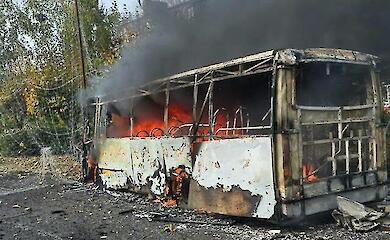
Russian forces struck a public bus in Kramatorsk: 30 dead and 18 injured

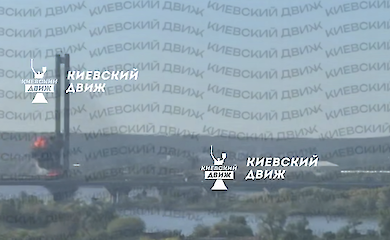
A Russian drone struck the South Bridge in Kyiv: metro services have been suspended

New Zealand has successfully restored populations of the country’s heaviest insect
News about war
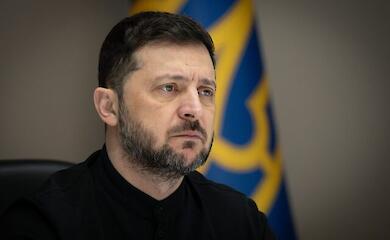
‘There has been significant damage to energy infrastructure following attacks by the Russian Federation’ – Zelenskyy
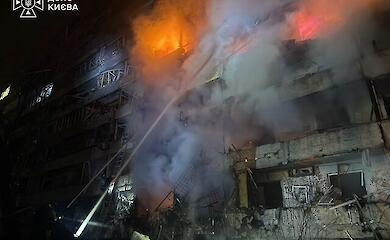
Russia has launched a ballistic missile strike on Kyiv: a residential building has been hit, and there are casualties and injured people
Russian ballistic missile strike on a thermal power station in Kyiv: what is known
Russia is plotting to assassinate the heads of European defence firms in order to undermine support for Ukraine — FT