
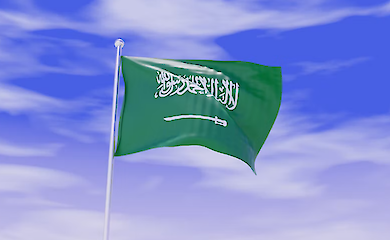

Media reports: one EU country is blocking the opening of accession negotiation clusters for Ukraine


Ukraine has already opened two of the six negotiation clusters for EU accession, but progress on the remaining clusters is being held up by Hungary’s stance. Budapest attributes its decision to the situation regarding the Hungarian national minority in Transcarpathia.
Hungary remains the only EU country blocking Ukraine’s progress towards opening new negotiating chapters on EU accession. According to a European official cited by Deutsche Welle, Budapest links its position to the issue of the rights of the Hungarian national minority in Transcarpathia.
In early September, the EU Council’s Working Group on Enlargement was once again unable to approve the results of Ukraine’s screening for clusters 2 and 3. Hungary opposed the decision, despite attempts by other EU countries to change its position, the publication notes.
What reason does Hungary cite?
According to DW, the Hungarian side states that the main obstacle remains unresolved issues relating to the rights of the Hungarian national minority in Ukraine.
According to a senior European official, Hungarian representatives are demanding greater progress and concrete results in Ukraine’s fulfilment of its obligations regarding the protection of national minorities.
“This happens in bilateral relations,” said the publication’s source, describing the situation as a dispute in which one side considers what has been done to be sufficient, whilst the other demands further steps.
The Ukrainian side, however, takes a different view. Deputy Prime Minister for European Integration Vsevolod Chentsov stated that Kyiv is making progress in its cooperation with Hungary on issues relating to the rights of national minorities, but does not consider it appropriate to link this issue to the opening of negotiation clusters. According to him, the progress of the negotiations should be determined by Ukraine’s achievements in meeting the accession criteria.
What negotiations has Ukraine already begun?
Negotiations on Ukraine’s accession to the EU began in 2026. On 15 June, the European Union opened the first cluster – ‘Fundamentals’ – which covers the rule of law, fundamental rights, the functioning of democratic institutions, public administration reform and economic criteria. Then, on 14 July, the sixth cluster – ‘External Relations’ – was opened. It covers foreign trade, international cooperation, and foreign, defence and security policy.
Thus, Ukraine has currently made progress on two of the six negotiation clusters, whilst the opening of the remaining clusters requires the consent of EU Member States.
The European Union officially emphasises that accession negotiations are a process based on meeting the criteria and achieving concrete progress. The European Council had previously called for the next clusters to be opened without delay, in accordance with the enlargement methodology.
This is not the first time Hungary has opposed Ukraine’s progress
The September decision marked yet another instance in which Budapest failed to support Ukraine’s transition to the next stage of negotiations. According to Ukrainian and European media reports, in early September Hungary once again blocked the approval of the screening for clusters 2 and 3.
However, in June 2026, all EU Member States agreed to open the first negotiating cluster with Ukraine. This allowed the negotiation process to be officially launched after a prolonged period during which Hungary’s position had remained one of the obstacles to its progress.
The dispute has now moved on to the next stage – the opening of new thematic clusters.
It should be noted that, for Ukraine, the opening of all negotiation clusters is an important step on the path to EU membership; however, the mere fact of their opening does not imply automatic accession. Each cluster involves meeting a large number of requirements, after which further work begins on agreeing and closing the relevant negotiation chapters.
Elena Rasenko writes about science, healthy living and psychology news, and shares her work-life balance tips and tricks.
Related news
Russia is plotting to assassinate the heads of European defence firms in order to undermine support for Ukraine — FT


Germany proposes speeding up Ukraine’s accession to the EU through the associate membership scheme


The EU has responded to Russia’s threats against foreign diplomats in Kyiv
Popular news

Scientists have identified which childhood experiences are linked to happiness in adulthood

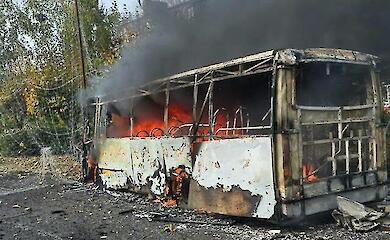
Russian forces struck a public bus in Kramatorsk: 30 dead and 18 injured


Marfan syndrome has been confirmed at the molecular level in domestic cats for the first time
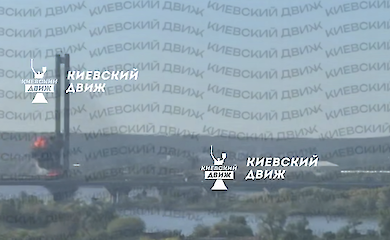
A Russian drone struck the South Bridge in Kyiv: metro services have been suspended
News about war
Russia is plotting to assassinate the heads of European defence firms in order to undermine support for Ukraine — FT
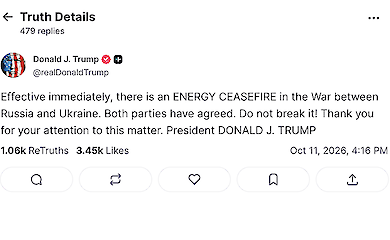
Trump announced an energy truce between Ukraine and Russia. A similar statement was made a month ago
Russian forces struck a public bus in Kramatorsk: 30 dead and 18 injured
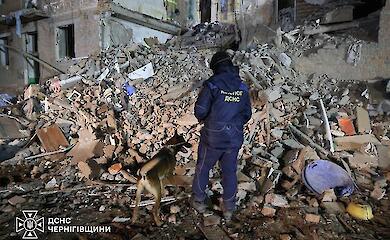
The death toll in Pryluky following the Russian missile strike has now risen to 22, including five children