

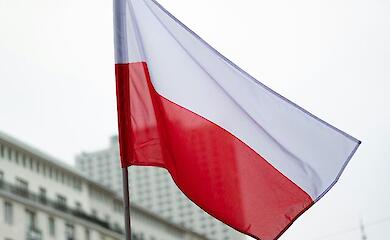
Magyar: Hungary will not refuse to allow Ukrainian men of conscription age to serve
- Home
- Overseas
- Refugees. How to survive
- Magyar: Hungary will not refuse to allow Ukrainian men of conscription age to serve


The EU has tightened the rules on granting protection to certain Ukrainian men of conscription age. Hungary has stated its readiness to take a different approach and has specifically highlighted the situation of Hungarians in Transcarpathia.
I’ve written a piece focusing on the key points: Hungary’s position, the situation regarding men of conscription age, and the fact that Péter Magyar’s statement does not mean that every applicant will automatically be granted protection. Hungary will continue to accept Ukrainian men of conscription age despite EU restrictions. The country’s Prime Minister, Péter Magyar, made this statement to journalists, according to TVP World.
Hungary intends to continue offering Ukrainian men of conscription age the opportunity to seek protection, despite the European Union’s new restrictions. Budapest is prepared to pay particular attention to ethnic Hungarians from Transcarpathia, said Hungarian Prime Minister Péter Magyar.
The Hungarian Prime Minister emphasised that the country’s government does not agree with the EU’s new approach. In his view, a person fleeing war should not automatically be denied the opportunity to seek protection in another European country.
“Hungary will take a different approach and provide assistance to those in need,” said Magyar.
He added that Budapest reserves the right to grant protection to Ukrainian men of conscription age arriving in Hungary.
In Hungary, special mention was made of the Hungarians of Transcarpathia
Madyar drew particular attention to Ukrainian citizens of Hungarian origin living in the Zakarpattia region. According to him, the very existence of this community is one of the reasons why Hungary insists on being able to determine independently to whom it grants protection.
Transcarpathia, which borders Hungary directly, is home to around 100,000 ethnic Hungarians. Magyar described the new EU restrictions as unacceptable.
According to the Hungarian Prime Minister, he raised this issue during a meeting with the President of the European Council, António Costa, in Budapest. Mályi questioned the wisdom of the restrictions, stating that it was wrong to create a situation in which people trying to flee a country at war are unable to seek protection in another European state.
He also stated that the new European rules effectively force Ukrainians to remain in a country at war. The Hungarian authorities, he said, intend to take a different stance and continue to consider the possibility of accepting such citizens.
What has changed in the EU
The temporary protection scheme for Ukrainians was introduced by the European Union following the start of Russia’s full-scale invasion in 2022. Thanks to this scheme, Ukrainians have been able to live in EU countries, work, access education and receive medical care without having to go through the standard procedure for obtaining refugee status.
In July 2026, EU member states agreed to extend temporary protection for Ukrainians until 4 March 2028. At the same time, the approach to certain new applicants was amended.
The new rules, which came into force on 5 August, impose restrictions on Ukrainian men of conscription age who have not fulfilled their military obligations in accordance with Ukrainian law. The restrictions do not apply to Ukrainians who were granted temporary protection before the new requirements came into force.
Elena Rasenko writes about science, healthy living and psychology news, and shares her work-life balance tips and tricks.
Related news

Homes for Ukraine in 2027: 7 rules following the reduction in payments


Media reports: one EU country is blocking the opening of accession negotiation clusters for Ukraine


Poland is preparing for a possible increase in the number of Ukrainians this winter

Ukraine is training ‘return ambassadors’: what they will be able to do for Ukrainians abroad — and what they won’t be able to resolve
Popular news

Scientists have identified which childhood experiences are linked to happiness in adulthood
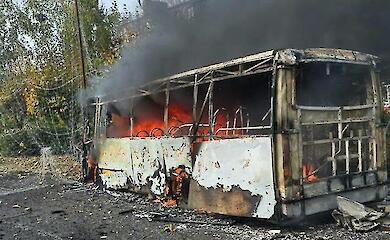
Russian forces struck a public bus in Kramatorsk: 30 dead and 18 injured


Marfan syndrome has been confirmed at the molecular level in domestic cats for the first time
A Russian drone struck the South Bridge in Kyiv: metro services have been suspended

News about war
Russia is plotting to assassinate the heads of European defence firms in order to undermine support for Ukraine — FT
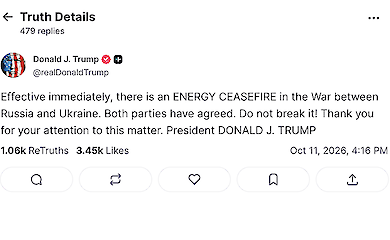
Trump announced an energy truce between Ukraine and Russia. A similar statement was made a month ago
Russian forces struck a public bus in Kramatorsk: 30 dead and 18 injured
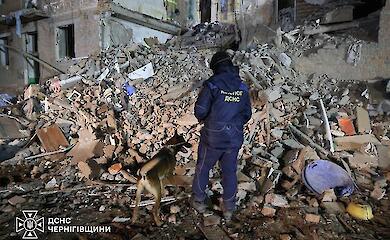
The death toll in Pryluky following the Russian missile strike has now risen to 22, including five children