

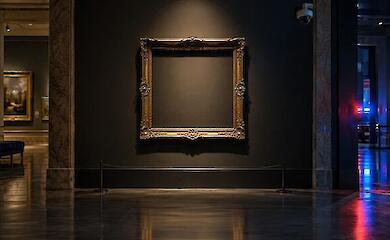
Literary tourism: why places in books don’t match up with reality


Readers travel to Hoert, Bath, the Lake District and Dorset, hoping to see the places they recognise from the books. Rebecca Hutchin, a researcher in literary geography, explains why an actual journey cannot fully match the image pieced together from text, films, photographs and personal experience. This is an analytical essay by the author, rather than a report on a new empirical study.
Book lovers visit the Brontë sisters’ Haworth, Jane Austen’s Bath, William Wordsworth’s Lake District and Thomas Hardy’s Dorset, but they never find there exactly the world they imagined whilst reading. Rebecca Hutchin, a researcher in literary geography, explains this disconnect in an essay for The Conversation as the result of the interplay between text, memory and imagination.
Geographical locations exist on a map, yet literary landscapes are created through the selection of details, omissions and fiction. Consequently, the reader does not arrive at an unfamiliar place: they compare it with an internal version that took shape long before the journey.
Details
Literary geography combines the study of texts with the exploration of space. The field took shape in the late 19th century, when the novel gained widespread popularity and readers began systematically searching for the real-life prototypes of the places described.
In 1899, William Lyon Phelps drew up a literary map of England, marking points associated with writers and their works. In 1904, William Sharp described ‘Dickens country’, ‘the Brontë country’ and the literary geography of the English Lake District.
Such maps did more than simply record addresses. They encouraged people to seek out the points where the fictional and real worlds intersect — a task now fulfilled by tourist itineraries, guidebooks and videos on social media.
A telling example is Thomas Hardy’s Wessex. The writer combined the geography of southern England with invented and altered place names, creating a region that readers soon began to perceive as almost real.
Hardy himself described Wessex as both a real and a dreamlike land. Even during his lifetime, guidebooks to the settings of his novels appeared, and the writer was concerned that the public was taking the fictional landscape too literally.
Readers imagining Dickens’s London or the Brontës’ moors fill in the gaps with their own experiences. The words are supplemented by scenes from film adaptations, photographs, memories of other cities and cultural associations. Everyone ends up with a slightly different place in their mind.
When a person finally arrives there, the physical landscape comes up against this internal map. Disappointment or, conversely, a sense of recognition depends not only on what is seen, but also on the image the traveller has brought with them.
Writers’ homes play a special role. They promise a sense of closeness to the author — the chance to step into the room where the book was written and see the owner’s belongings. But exhibitions often blend the author’s biography with their characters and plots, further blurring the line between life and fiction.
Sometimes, fictional geography literally creates a tourist attraction. When Arthur Conan Doyle began writing stories about Sherlock Holmes, the address 221B Baker Street did not correspond to a real house under the numbering system of the time. Now, a museum dedicated to the fictional detective operates at this address.
Why this matters
Literary tourism shows that the reader does not passively receive a ready-made world. They participate in its creation by linking the text to their own experience. This is precisely why the same description gives rise to different mental maps.
For museums and tourism projects, this presents a twofold challenge. They need to recount the real-life biography and history of a place without passing off the fictional world as a documentary reconstruction, whilst at the same time taking visitors’ expectations into account.
Any attempt to find the ‘exact’ location from a book is likely doomed to failure: even the most realistic novel presents a selected and transformed version of a space. However, the impossibility of a perfect match may not be a drawback, but rather a reason to return to the text and the journey.
It is important to note that Hatchin’s publication is an analytical essay by a specialist in literary geography, rather than a report on a new experiment or a survey of tourists. She interprets historical examples and ideas from literary studies; therefore, her conclusions should not be presented as a quantitatively verified psychological effect.
The term ‘anemoya’, mentioned in the essay, is a modern neologism coined by the writer John König to describe nostalgia for a time one has not experienced. The author offers a spatial analogy, but this is a metaphor, not a generally accepted clinical or scientific term.
Source
Rebecca Hutcheon. Why the places we love in books can never quite be found in real life. The Conversation / Phys.org, 17 September 2026.
About the author: Rebecca Hutcheon’s profile at the University of South Wales. Her research interests include 19th-century literature, digital cartography and literary geography.
Maria Grynevych, project manager, journalist, co-author of Guidebook Sacred Mountains of the Dnieper Region, Lecture Course: Cult Topography of the Middle Dnieper Region.
Related news

Scientists have learnt to predict where to expect hot summers in Europe


Why in a new city we first look for the best restaurant before returning to a familiar one

You can't see the stars in the UAE. People go to the desert to see the Milky Way


Popular news
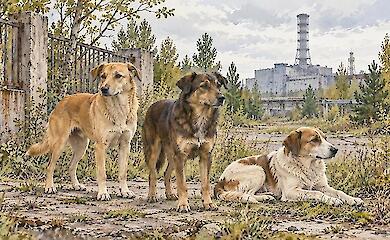
Genetic evidence of natural selection has been found in dogs near the Chernobyl Nuclear Power Station

A fish with a transparent head was filmed in 4K at a depth of 600 metres


News about war
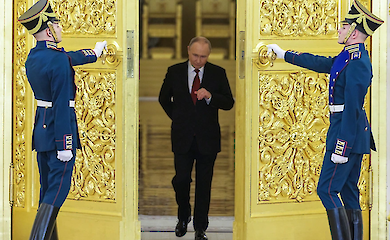
Russia is threatening to destroy bridges, ports and power stations in Ukraine in order to secure territorial concessions from Kyiv – FT

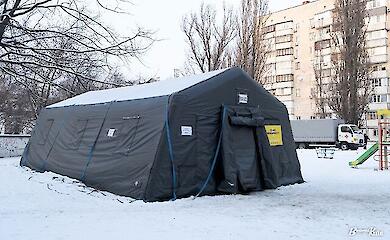
Emergency power cuts have been introduced in Kyiv and warming centres are being set up — Klitschko

Zelenskyy confirmed that the Russian warning system had been hacked: Ukraine has responded to the Russian Federation’s cyberattack

Stephen Hubbard has returned to the US after four years in prison in Russia: what is known about his case