


In the US, friends help around 2 million older people


Friends and neighbours have become a significant part of the informal care system for older people in the US. A study estimated their number at 2.4 million and highlighted how their support differs from that provided by family members.
Around two million older Americans with limitations in their daily activities receive help from at least one friend or neighbour. The authors of a study in JAMA Network Open estimated the number of such informal carers in the country at 2.4 million.
Friends do not usually take the place of relatives and devote less time to care. Their role is often more specialised: giving someone a lift, doing the shopping, preparing meals, helping them leave the house or accompanying them to the doctor.
Details
Researchers from the University of Michigan and Wayne State University analysed data from the US National Survey of Health and Ageing Trends for 2023. The sample included 2,619 Medicare recipients aged 65 and over who, due to their health or functional limitations, required help with daily living. The average age of participants was around 79.
The participants named 451 friends or neighbours and 4,985 relatives who had helped them during the previous month. After extrapolating the figures to the US population, the researchers estimated the number of friends providing help at 2.4 million, and relatives at 21.4 million. Together, they provided support to approximately 12.2 million older people.
Although the main burden still falls on the family, around 14 per cent of participants named a friend or neighbour among those who look after them. Approximately two million older people, according to the national estimate, received such help from at least one person outside the family.
On average, friends spent 18.1 hours a month providing care, whilst relatives spent 66.6 hours. Only 3.3 per cent of friends lived with the person receiving care, compared with 46.4 per cent of relatives. A friend was the sole carer in 11.1 per cent of cases, whereas among relatives this figure stood at 21.2 per cent.
The main difference concerned transport. 65.7 per cent of friends providing help and 52.7 per cent of relatives organised journeys. Other common tasks carried out by friends included shopping, helping the person leave the house, preparing meals and accompanying them to medical appointments.
Friends were significantly less likely to provide personal and medical care. When it came to self-care, including personal hygiene and getting dressed, 9.3 per cent of friends helped, compared with 29.1 per cent of relatives. In terms of medical care, the figures were 14 per cent and 45.1 per cent respectively.
Two-thirds of friends specialised in only one area of care. The authors describe their contribution as supplementary and collaborative: such people are more likely to be part of a wider support network than to bear the entire responsibility alone.
Friends were more likely to provide care for those who lived alone, were unmarried, were slightly younger within the age group studied, or had a higher education qualification. For example, half of those receiving help from friends lived alone — compared with 26 per cent of those helped solely by relatives. These figures reflect statistical correlations and do not prove that the characteristics mentioned are, in themselves, the cause of friends’ involvement.
Why this matters
The family model of care is becoming less reliable where there is a growing number of older people who are single, childless or living far from their relatives. Friends and neighbours can help meet some everyday needs, particularly those related to mobility and maintaining independent living.
However, their contribution is easily overlooked. Health and social care services traditionally enquire about relatives, even though it may be a friend who takes a person to the doctor, knows their daily routine, or is the first to notice a deterioration in their condition. The authors suggest taking such helpers into account when planning care – with the older person’s consent and whilst respecting confidentiality.
However, support from friends should not be a substitute for accessible social and medical services. Friends may lack the time, money, formal authority or skills required for complex care. They, too, are ageing, may move away and may themselves need support.
The study has limitations. It is a snapshot analysis of data from 2023, so it does not show how support networks change as the disease progresses. There were few people in the sample who were cared for exclusively by friends, and insufficient information on the age, gender and duration of the caregiving burden of the carers themselves. The authors did not assess the extent to which the care recipients’ needs were met. Finally, the findings relate to the US and may not be applicable to countries with different cultures and social support systems.
Source
Yee To Ng, Vicki A. Freedman, Kira S. Birditt, Amanda N. Leggett. Friend Caregivers Among Older Adults. JAMA Network Open, 2026;9(7):e2621697. DOI: 10.1001/jamanetworkopen.2026.21697. The article is published under a CC BY-NC-ND licence.
The study was funded by the US National Institute on Ageing and the Michigan Centre on the Demography of Ageing. The authors reported that the funders were not involved in the design, data analysis, manuscript preparation or decision to publish; no conflicts of interest were declared.
Further context: an article on the role of friends in caring for older people.
Maria Grynevych, project manager, journalist, co-author of Guidebook Sacred Mountains of the Dnieper Region, Lecture Course: Cult Topography of the Middle Dnieper Region.
Related news
Scientists have identified which childhood experiences are linked to happiness in adulthood


Scientists have discovered which snakes people find scary, beautiful and repulsive


Biologists have identified two contenders for the title of the world’s loudest birds
Popular news
Scientists have identified which childhood experiences are linked to happiness in adulthood

Marfan syndrome has been confirmed at the molecular level in domestic cats for the first time

Media reports: one EU country is blocking the opening of accession negotiation clusters for Ukraine


New scans have revealed hidden cameras near Tutankhamun’s tomb

News about war
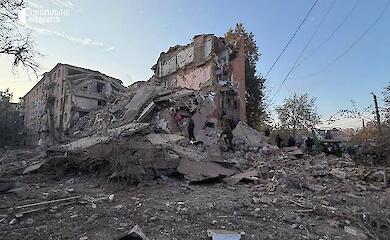
Russia has struck a multi-storey residential block in Pryluky with a missile: there are fatalities, and people are being rescued from the rubble


Western media report on the situation regarding train services in Ukraine following shelling by the Russian Federation

"Russia wants Ukrainians to flee their cities, and we must do everything we can to save people" – Zelenskyy

A Russian drone struck the South Bridge in Kyiv: metro services have been suspended