

In male cheetahs, DNA methylation changes after they have established their territory


In male cheetahs, the transition from a nomadic lifestyle to territoriality is accompanied by extensive changes in DNA methylation. The study does not show that it is these changes specifically that trigger the physical and behavioural changes.
In male cheetahs in Namibia, the transition from a non-territorial to a territorial lifestyle is accompanied by a large-scale reorganisation of DNA methylation. This was revealed by a study by the Leibniz Institute for Zoo and Wildlife Research (Leibniz-IZW), published in the journal *Molecular Ecology*.
The researchers compared blood samples from the same 10 adult males before and after they became territorial. Changes in methylation were consistently linked to the transition; however, the study does not allow us to conclude that these changes are the direct cause of the animals’ physical and behavioural changes.
Details
Adult male cheetahs begin their independent lives as animals without their own territory, which researchers refer to as ‘floaters’. They roam large areas either alone or in small groups. Some males later establish a territory, sometimes following dangerous confrontations with its former occupants.
Following this, over the course of several months, the males become more robust, gain muscle mass, their head size increases, and their aggression and boldness grow. At the same time, the area over which they roam shrinks dramatically: they concentrate around a patch marked by trees.
The researchers examined paired samples of peripheral blood mononuclear cells from 10 clinically healthy males. Each cheetah was first examined whilst a floater and then again once it had become a territorial male. On average, 25.7 months elapsed between the two sample collections, with a range of 6.2 to 59.9 months.
Three independent analytical approaches identified hundreds of genomic regions with differences in methylation. 554 of these regions were reproduced by at least two methods and spanned 481 genes. The biological processes associated with these regions related, in particular, to anatomical and neuronal development, ion channel function, cellular signalling and energy metabolism.
A separate analysis of age-related changes found no correlation at the level of the methylation sites themselves with the pattern associated with the transition to territoriality. This reduces the likelihood that the result is explained solely by the fact that the animals were older at the time of the repeat examination.
Why this is important
Cheetahs are characterised by very low genetic diversity. Therefore, the ability of the same genotype to give rise to different physiological and behavioural states through the regulation of gene activity may be an important aspect of their phenotypic plasticity.
The authors also identified 21 candidate epigenetic markers that could potentially help distinguish between floaters and territorial males. However, this set was derived from the same small sample and has not yet been validated in an independent group of animals.
The study has significant limitations. The main analysis is based on just 10 males. Methylation was measured in blood cells, so it cannot be assumed that the same changes occur in the brain, muscles or other tissues. Furthermore, the method does not directly measure gene activity. Finally, without intermediate samples, it is impossible to determine whether the epigenetic changes occurred before the transition to territoriality, simultaneously with it, or as a consequence of it.
Source
Study: Colin Vullioud et al., ‘Epigenetic Changes Associated With a Phenotypic Transition in Namibian Cheetahs’, Molecular Ecology, 2026. DOI: 10.1111/mec.70527.
Official Leibniz-IZW press release: From strays to territory bosses: epigenetics makes cheetahs adaptable.
Maria Grynevych, project manager, journalist, co-author of Guidebook Sacred Mountains of the Dnieper Region, Lecture Course: Cult Topography of the Middle Dnieper Region.
Related news

Could meditation reveal the secret of the universe? Physicists have put forward an unexpected theory


Why other people’s music drives us mad: scientists have identified five reasons

‘Don’t get dirty!’: how adults unwittingly spoil children’s games

Eye-catching fake news on social media catches the eye more quickly, but isn’t remembered any better
Popular news

Scientists have identified which childhood experiences are linked to happiness in adulthood

Russian forces struck a public bus in Kramatorsk: 30 dead and 18 injured

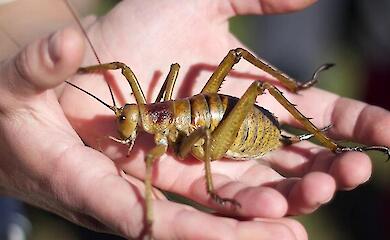
New Zealand has successfully restored populations of the country’s heaviest insect

Russian ballistic missile strike on a thermal power station in Kyiv: what is known
News about war

‘There has been significant damage to energy infrastructure following attacks by the Russian Federation’ – Zelenskyy

Russia has launched a ballistic missile strike on Kyiv: a residential building has been hit, and there are casualties and injured people
Russian ballistic missile strike on a thermal power station in Kyiv: what is known

Russia is plotting to assassinate the heads of European defence firms in order to undermine support for Ukraine — FT
