


In Britain, there has been an increase in the number of incidents involving unidentified drones appearing near military bases – The Independent


There has been a sharp rise in the number of recorded flights by unidentified drones near British military installations. London is strengthening its detection systems and expanding the military’s powers to deal with drones.
Drones are now being spotted near British military installations almost every day. Over the past year, such incidents have increased significantly, and experts are warning of a potential rise in the threat posed by hostile states. According to The Independent, around 340 drone incidents were recorded near UK Ministry of Defence sites over the past year. By way of comparison, there were around 250 such incidents in 2025 and 126 in 2024.
The rise in the number of incidents has caught the attention of British politicians and experts against a backdrop of growing interest in the use of drones for reconnaissance and surveillance of military sites.
However, the UK Ministry of Defence emphasises that the rise in the figures does not necessarily indicate a proportional increase in hostile activity. According to the Ministry, the number of recorded incidents has also been influenced by improvements in drone detection systems, new reporting procedures and increased awareness amongst military personnel.
Who is behind the drone flights?
The British Ministry of Defence has not disclosed exactly who it suspects of organising these incidents. However, Tobias Ellwood, a former Conservative defence minister and ex-military officer, has stated that a significant proportion of the cases may be linked to the actions of foreign adversaries. He believes that Russia and Iran may be behind many such operations; however, the British authorities have not presented any public evidence confirming these states’ responsibility for specific incidents.
Ellwood also stated that the rise in the number of sightings indicates that British military installations are becoming potential targets for intelligence-gathering activities.
Britain is stepping up protection of military sites
London is already stepping up measures against drones. In February, the British government introduced new restrictions on drone flights near military installations and announced an expansion of the military’s capabilities to counter drones. At the time, the Ministry of Defence reported 266 incidents near defence facilities in 2025, compared with 126 the previous year.
According to the publication, since February 2026, specific restricted airspace zones have been in place over dozens of Ministry of Defence sites. The relevant regulations prohibit drone flights within these designated zones without authorisation.
The British government is also investing in technologies to detect and neutralise drones. According to the Ministry of Defence, spending on counter-drone systems has been significantly increased, and automated target detection and tracking systems are already operational at some key facilities.
The military are to be allowed to shoot down dangerous drones themselves
Another measure relates to the expansion of the powers of British military personnel. In February, the government announced that, following the adoption of the relevant legislative amendments , the military would be able to neutralise drones posing a threat to defence facilities on their own initiative, without the need to involve the police. These powers are intended to complement existing measures for the protection of military bases.
Elena Rasenko writes about science, healthy living and psychology news, and shares her work-life balance tips and tricks.
Related news

The British Defence Secretary has called for preparations to be made for war over the next 1,000 days


In Britain, residents have been urged to stock up on water and food for three days

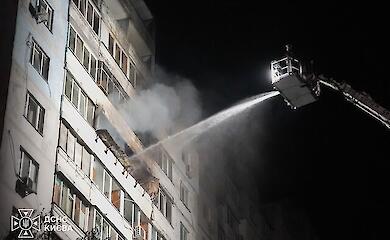
A Russian drone struck a multi-storey building in Kyiv: there have been fatalities, and children are among the injured

Popular news

Genetic evidence of natural selection has been found in dogs near the Chernobyl Nuclear Power Station



A fish with a transparent head was filmed in 4K at a depth of 600 metres

News about war

Russia is threatening to destroy bridges, ports and power stations in Ukraine in order to secure territorial concessions from Kyiv – FT
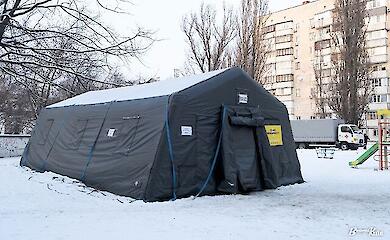
Emergency power cuts have been introduced in Kyiv and warming centres are being set up — Klitschko

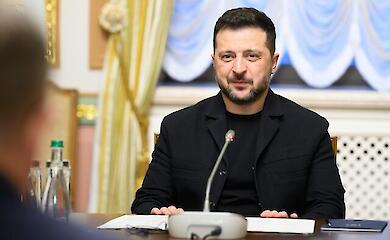
Zelenskyy confirmed that the Russian warning system had been hacked: Ukraine has responded to the Russian Federation’s cyberattack

Stephen Hubbard has returned to the US after four years in prison in Russia: what is known about his case
