
Ig Nobel Prizes were awarded for cockroach milk and the science of blowing one’s nose
- Home
- Life
- Curiosities
- Ig Nobel Prizes were awarded for cockroach milk and the science of blowing one’s nose


The winners of the 2026 Ig Nobel Prizes were announced in Zurich. Among the honoured works are studies into the nutritional value of cockroach crystals, the correct way to blow one’s nose, and the evolution of the kiss.
Research into cockroach milk, the correct way to blow one’s nose, and the decomposition of underwear in soil were among the winners of the 2026 Ig Nobel Prizes. Ten research teams received the awards.
The ceremony took place on 3 September in Zurich. For the first time in 35 years, the prize was awarded outside the US. The organisers explained that the move was due to concerns that it might be unsafe or difficult for international participants and journalists to travel to the country.
Details
The Ig Nobel Prize, known worldwide as the Ig Nobel Prize, is awarded by the journal *Annals of Improbable Research*. It is given to work that first makes people laugh and then makes them think.
The prize in chemistry was awarded to an international team of researchers studying the protein crystals of the viviparous cockroach Diploptera punctata. The female of this species secretes a nutrient-rich fluid into her brood pouch for the embryos. In their intestines, this fluid concentrates and forms crystals containing proteins, carbohydrates and fats.
The scientists estimated the energy value of a single such crystal to be more than three times higher than that of a comparable mass of cow’s milk. However, this is not a ready-to-drink beverage or a proven product for human consumption: the 2016 study focused on the structure and function of the nutrient crystals within cockroach embryos.
Other 2026 awards went to studies on:
- the aerodynamics of blowing one’s nose — the author of a Japanese study from 1977 recommended a strong and prolonged exhalation;
- the evolutionary history of kissing in humans and other animals;
- differences in how parents perceive the odour of infants and adolescents;
- a urinal design that reduces splashing;
- the use of female mosquito proboscis as ultra-fine nozzles for 3D printing;
- the link between social status and unethical behaviour;
- a preference for friends who are kind to oneself but capable of behaving hostilely towards one’s opponents;
- assessments of soil condition based on the rate of decomposition of buried cotton clothing.
The biology prize was awarded to a group studying the bites of the venomous Bothrops jararaca snake. Wearing protective footwear, the researchers carefully stepped next to the snakes or on various parts of their bodies tens of thousands of times. This work was subsequently retracted by the journal *Scientific Reports* due to concerns regarding the experiment and the treatment of the animals.
Why this matters
An unusual topic does not render research meaningless. The study on cockroach crystals helped to describe a rare method of embryonic nutrition and the structure of a protein formed inside a living organism. Experiments on the shape of urinals address a practical hygiene issue, whilst the project involving cotton underwear offers an accessible way of encouraging volunteers to monitor soil conditions.
That said, the Ig Nobel Prize does not replace scientific peer review nor does it re-validate the conclusions of a study. Among the laureates are older studies, theoretical calculations and even retracted papers. The award recognises, above all, an unusual question and the study’s ability to spark interest in science.
The organisers plan to alternate between Zurich and other European cities. They intend to hold the 2027 ceremony in Antwerp.
Source
The list of winners and details of the ceremony have been published in the *Annals of Improbable Research* and in a review in *Chemical & Engineering News*.
Research into protein crystals: Sanchari Banerjee et al., ‘Structure of a heterogeneous, glycosylated, lipid-bound, in vivo-grown protein crystal at atomic resolution from the viviparous cockroach Diploptera punctata’, IUCrJ, 2016. DOI: 10.1107/S2052252516008903. The article is available as open access.
Maria Grynevych, project manager, journalist, co-author of Guidebook Sacred Mountains of the Dnieper Region, Lecture Course: Cult Topography of the Middle Dnieper Region.
Related news

Physicists have observed a quantum leap in sound in real time for the first time

Heat has a ‘memory’: physicists have developed a new theory of heat transfer
Popular news

Scientists have identified which childhood experiences are linked to happiness in adulthood


Russian forces struck a public bus in Kramatorsk: 30 dead and 18 injured


A Russian drone struck the South Bridge in Kyiv: metro services have been suspended
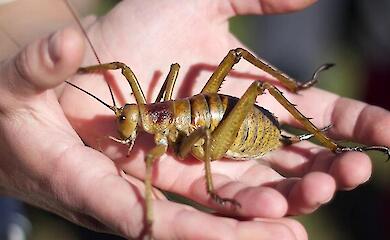
New Zealand has successfully restored populations of the country’s heaviest insect
News about war

‘There has been significant damage to energy infrastructure following attacks by the Russian Federation’ – Zelenskyy

Russia has launched a ballistic missile strike on Kyiv: a residential building has been hit, and there are casualties and injured people
Russian ballistic missile strike on a thermal power station in Kyiv: what is known

Russia is plotting to assassinate the heads of European defence firms in order to undermine support for Ukraine — FT