

Germany calls on the EU to tighten the rules on issuing tourist visas to Russians - The Guardian


Berlin believes that the current influx of Russian tourists is making it difficult to monitor entry into the European Union. Why is Germany calling for stricter visa rules, and what decision might the EU take?
German Chancellor Friedrich Merz’s team is calling on the European Union to reduce the issuance of tourist visas to Russian citizens to the “absolute minimum”. Berlin believes that the current scale of travel by Russians to the EU is inconsistent with sanctions policy and poses additional security risks. According to The Guardian, the German Foreign Ministry is currently actively working on tightening visa policy.
The incident in Leipzig provided the impetus
One of Berlin’s arguments is the investigation into an alleged attempted attack on Leipzig Airport. German law enforcement agencies are investigating the involvement of a Belarusian national, who also holds Russian citizenship, in this case.
According to The Guardian, investigators believe the suspect may have used a tourist visa issued by Italy to enter the EU. Against this backdrop, the German authorities state that the current visa issuance rules require a review.
Germany had previously directly accused Russia of organising the failed drone attack near Leipzig/Halle Airport. Berlin described the incident as part of a wider Russian hybrid campaign against European countries, the publication notes.
Berlin wants to reduce the influx of Russian tourists
Berlin points to a contradiction between the mass issuance of tourist visas and the sanctions policy introduced by the EU following the start of Russia’s full-scale war against Ukraine.
Roderich Kisewetter, a spokesperson for the CDU and the party’s expert on foreign policy and security, has called on the EU to immediately halt the issuing of tourist visas to Russians or to reduce it to a minimum.
According to him, the current scale of visa issuance runs counter to the European policy of isolating Russia and gives the impression of a return to normal relations with Russian citizens.
“The excessive issuing of tourist visas to Russians runs counter to the European strategy of isolating Russia,” said Kisevetter, adding that this applies particularly to wealthy Russians who, in his view, benefit from the Kremlin’s policies.
The EU is already discussing tightening the rules
The issue of travel restrictions on Russians is being discussed at EU-wide level. Following the incident in Leipzig, the EU’s foreign policy chief, Kaja Kallas, expressed broad support for stricter restrictions on Russian tourists, as well as a possible entry ban on former Russian military personnel.
However, the approach taken by EU countries remains inconsistent. Some countries have already virtually stopped issuing tourist visas to Russians, whilst others continue to issue them in significant numbers. According to The Guardian, in 2025 Italy, France and Spain issued the majority of Schengen visas to Russian citizens.
Elena Rasenko writes about science, healthy living and psychology news, and shares her work-life balance tips and tricks.
Related news
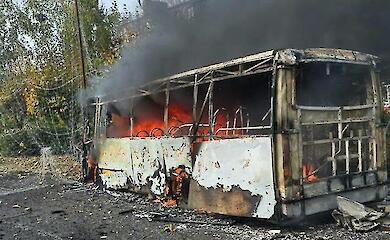
Russian forces struck a public bus in Kramatorsk: 30 dead and 18 injured

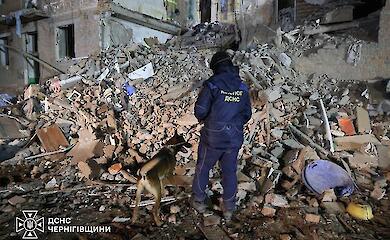
The death toll in Pryluky following the Russian missile strike has now risen to 22, including five children
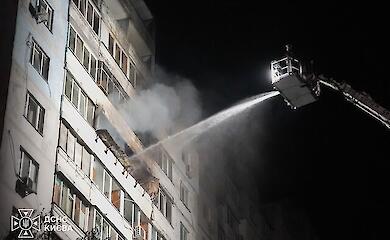
A Russian drone struck a multi-storey building in Kyiv: there have been fatalities, and children are among the injured
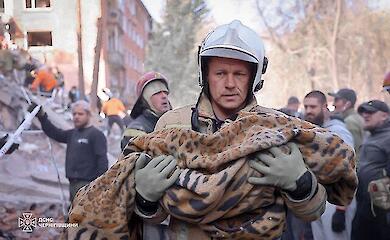
In Pryluky, the bodies of three children were recovered from the rubble of a residential building: the aftermath of the Russian attack
Popular news

Scientists have identified which childhood experiences are linked to happiness in adulthood

Russian forces struck a public bus in Kramatorsk: 30 dead and 18 injured

Marfan syndrome has been confirmed at the molecular level in domestic cats for the first time
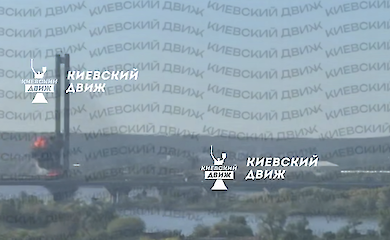
A Russian drone struck the South Bridge in Kyiv: metro services have been suspended

News about war
Russia is plotting to assassinate the heads of European defence firms in order to undermine support for Ukraine — FT
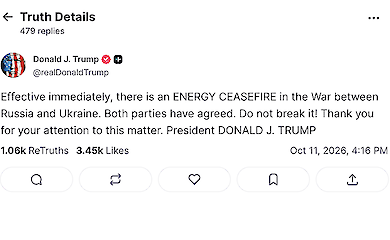
Trump announced an energy truce between Ukraine and Russia. A similar statement was made a month ago
Russian forces struck a public bus in Kramatorsk: 30 dead and 18 injured
The death toll in Pryluky following the Russian missile strike has now risen to 22, including five children