


Gas under the existing terms until 31 March: 10 facts about the Cabinet’s decision


The Cabinet of Ministers has extended the special gas supply arrangements until 31 March 2027. We take a look at what will remain unchanged this winter and why the discussion of reform does not mean a decision has already been taken to increase tariffs.
The Cabinet of Ministers has extended the special measures in the gas market until 31 March 2027. This maintains the current conditions for the public and heat producers for the heating season, but does not set a new uniform retail tariff for every domestic consumer.
The main practical conclusion is that the mere expiry of the preferential period on 31 March does not mean that gas prices will automatically rise the following day. As at 30 September 2026, the government had not approved either a new domestic price to apply after that date or a schedule for its increase. There are existing regulations, international obligations and preparatory work on the reform – these represent different levels of decision-making.
Details
1. The Cabinet of Ministers has extended the PSO until 31 March 2027
This refers to Cabinet of Ministers Resolution No. 1179 of 23 September 2026. It amends the basic Resolution No. 812 on special obligations, or PSO, and replaces the previous expiry date of the scheme – 30 September 2026 – with 31 March 2027. The document comes into force on 1 October 2026.
The Government announced the decision on 28 September. Therefore, the date of the meeting and the resolution number are more important than the date of the news item: it is the resolution itself that is the legally binding act. It extends the existing mechanism for the heating season, rather than introducing a new pricing model.
2. Households and heat producers are protected by different elements of the mechanism
For domestic consumers, the outcome is determined by several factors at once: the price caps set by law, their supplier’s annual offer, and the specific obligations of state-owned companies in the gas market. The Cabinet of Ministers officially designates the general public as one of the groups for which preferential terms are maintained.
For heat producers, Resolution No. 812 explicitly regulates gas supplies under the Public Service Obligation (PSO). These are enterprises that produce heat and hot water for the public, as well as other categories specified in the resolution. The extension allows them to receive a certain volume of gas on special terms throughout the heating season.
The decision also covers supplies to gas distribution system operators and certain combined heat and power plants in frontline areas. These are elements of the resilience of the gas and heating infrastructure, rather than new consumer tariffs.
3. The price for most households remains the same, but it is not a uniform tariff set by the Cabinet of Ministers
The majority of domestic customers are served by the Naftogaz of Ukraine Group. Its current annual plan specifies a price of 7.96 UAH per cubic metre, including VAT, for the period from 1 May 2026 to 30 April 2027. This serves as a necessary guide for the public, but legally it remains the price offered by a specific supplier, rather than a universal tariff set by Resolution No. 1179.
For gas used by enterprises to produce heating and hot water for the public, Naftogaz Trading publishes a fixed price of 7,420 UAH including VAT per 1,000 cubic metres. A transmission tariff is added to this separately — currently 662.60 UAH including VAT per 1,000 cubic metres. This price applies to the volume specified in the public service obligation (PSO) and is not the same as the final heating tariff shown on the bill.
If a heating company uses gas in excess of the fixed volume or for other purposes, the contracts provide for different pricing terms. Therefore, the statement ‘the Cabinet of Ministers has frozen the entire price of gas’ would be too broad: the decision maintains a specific special regime and its categories.
4. The government explains the extension by citing the war and the need to get through the winter without a price shock
In its official statements, the Cabinet of Ministers cites three reasons: the difficult socio-economic situation; the need to guarantee the population an uninterrupted supply of gas; and the stable operation of heating and energy infrastructure during the war and attacks on energy facilities.
In this case, the PSO acts as a temporary stabiliser during the season of peak consumption. The state is not abolishing the gas market entirely, but is imposing special obligations on certain market participants to ensure that gas is supplied to protected categories in accordance with specified rules.
5. A separate legislative moratorium on tariff increases is in force
Law No. 2479-IX prohibits, during martial law and for a further six months following the month in which it is terminated or repealed, any increase in the price of natural gas for domestic consumers above the price applicable in their dealings with their supplier on 24 February 2022. The Act also limits tariff increases for the public on gas distribution, heating and hot water.
This means that the resolution on public service obligations and the moratorium cannot be regarded as one and the same decision. Decree No. 1179 sets the seasonal duration of the special obligations until 31 March 2027. The Act establishes a broader legal protection in terms of time, linked not to the heating season but to martial law and the six-month period following it.
6. Bills this winter will retain the previous price per unit, but the total amount may vary
The extension of the PSO does not provide grounds for automatically changing the price per cubic metre under the current domestic tariff plan or for increasing the tariff for district heating for the general public. For Naftogaz customers, the annual price of 7.96 UAH remains in force after 31 March — until 30 April 2027, under the terms of the published proposal.
The total amount on the bill may still be higher or lower, however, as it depends on actual consumption, meter readings, adjustments, outstanding balances, and any discounts or subsidies. Decree No. 1179 does not revise the separate charge for gas distribution. Consequently, the fact that pricing conditions remain unchanged does not guarantee that the amount payable will be the same every month.
7. The regulated price is maintained by the PSO, whilst the difference becomes the responsibility of the state and energy companies
The mechanism does not operate as a discount on each bill. The Cabinet of Ministers imposes an obligation on companies within the ‘Naftogaz’ group and other specified participants to sell the resource to protected categories in accordance with established rules. Heating and municipal energy companies then use this gas to supply heat to the public at tariffs that are currently also capped by law.
Law No. 2479-IX provides for compensation for economically justified expenses incurred by market participants fulfilling public service obligations, whilst for heating companies it establishes a mechanism for settling the difference in tariffs through the state budget and mutual settlements. In practice, until such settlements are made, the financial burden remains with state-owned gas companies and utility firms. In the IMF’s July report, this gap is described as a quasi-fiscal burden on state-owned energy companies.
However, the published notice regarding Resolution No. 1179 does not specify a separate amount of budgetary compensation for the 2026/27 season. Therefore, one cannot conclude from the fact of the extension that the entire difference has already been financed and paid out.
Why this is important
8. The increase will not take effect automatically after 31 March
On 31 March 2027, the term of the PSO established by Resolution No. 1179 will expire, but no new price will come into effect. To amend the terms and conditions, the Cabinet of Ministers, Parliament, the regulator or suppliers — within the limits of their powers — will need to take separate decisions. Furthermore, the legislative moratorium remains in force for as long as the statutory protection period continues.
At present, all that is known is that the government is working on an updated tariff policy and promises to combine it with more targeted support. In Decision No. 1179, the Cabinet of Ministers did not set the gas price after the heating season, the date for lifting the moratorium, or an approved schedule for price increases.
9. IMF and EU documents contain reform commitments, but there is no finalised payment plan for 2027
In the IMF’s July 2026 report, the Ukrainian authorities undertook to analyse subsidies and quasi-fiscal expenditure in the energy sector, assess the social consequences of a possible adjustment to utility tariffs, and prepare amendments to the law on the moratorium. The assessment of the fiscal and social implications, together with mechanisms to protect vulnerable households, is scheduled to be completed by the end of February 2027.
The document allows for the possibility that, once a sufficient protection system is in place, a gradual adjustment of household tariffs could begin in 2027. This is a condition of the programme and the authorities’ intention, rather than a decree setting a new price. The IMF itself links any changes to targeted support and does not specify a tariff approved by the Ukrainian authorities.
Ukraine’s Plan for the Ukraine Facility sets out a roadmap for the gradual liberalisation of the gas and electricity markets following the lifting of martial law, including reform of public service obligations and the protection of vulnerable consumers. The plan sets out the direction and milestones for cooperation with the EU, but does not in itself lift the current moratorium or change the price in domestic supply contracts.
10. What has already been decided, and what remains a plan for now
- Already in force: a statutory moratorium on increases to domestic gas prices and a number of utility tariffs; current plans published by suppliers; the basic PSO regime under Decree No. 812.
- Already adopted: Resolution No. 1179, which, with effect from 1 October 2026, extends the special obligations until 31 March 2027.
- Officially in preparation: an analysis of subsidies, costs and social protection; an update to tariff policy; and a roadmap for market reform as part of agreements with international partners.
- Not yet adopted: a gas price increase after 31 March, a new tariff for households, the date for lifting the moratorium, and the final timetable for tariff reform in 2027.
Consequently, this winter the government is maintaining price stability through the PSO and the moratorium. The discussion regarding the transition to economically justified tariffs is genuine and enshrined in international programmes, but there is no basis for presenting it as an announcement of a supposedly already decided price rise following the heating season.
Source
- Cabinet of Ministers Resolution No. 1179 of 23 September 2026.
- Cabinet of Ministers’ announcement on the extension of the PSO until 31 March 2027.
- Cabinet of Ministers’ announcement on prices for households and heat producers.
- Cabinet of Ministers Resolution No. 812 on the PSO in the natural gas market.
- Law No. 2479-IX on the moratorium and compensation mechanisms.
- Explanation by the National Commission for State Regulation of Energy and Utilities (NKREKU) regarding the price of gas for domestic consumers.
- Annual tariff of the ‘Naftogaz of Ukraine’ Group.
- ‘Naftogaz Trading’ prices for heat producers.
- IMF report on the first review of the EFF programme, July 2026.
- Ukraine’s plan for the Ukraine Facility.
Maria Grynevych, project manager, journalist, co-author of Guidebook Sacred Mountains of the Dnieper Region, Lecture Course: Cult Topography of the Middle Dnieper Region.
Related news




Ukraine will not have enough gas until the end of the heating season - Reuters

Popular news

Scientists have identified which childhood experiences are linked to happiness in adulthood

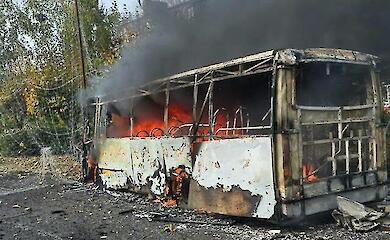
Russian forces struck a public bus in Kramatorsk: 30 dead and 18 injured


Marfan syndrome has been confirmed at the molecular level in domestic cats for the first time
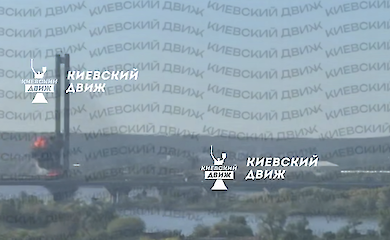
A Russian drone struck the South Bridge in Kyiv: metro services have been suspended

News about war
Russia is plotting to assassinate the heads of European defence firms in order to undermine support for Ukraine — FT
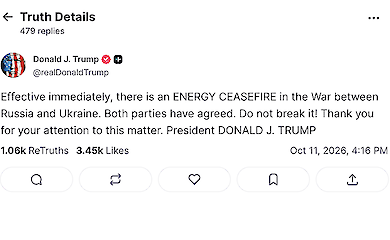
Trump announced an energy truce between Ukraine and Russia. A similar statement was made a month ago
Russian forces struck a public bus in Kramatorsk: 30 dead and 18 injured

The death toll in Pryluky following the Russian missile strike has now risen to 22, including five children