
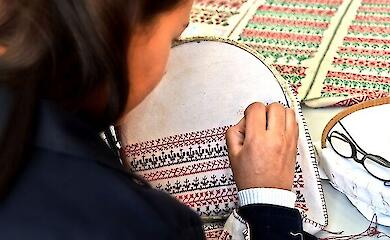

From ‘witch’s bottles’ to stones: how people used magic to protect their homes


Plants, symbols on walls, hidden bottles and special stones have for centuries helped people to feel that their homes were safe. Historians caution that the magical significance of some of these finds remains merely one possible interpretation.
Fear of fire, illness, the evil eye and malevolent spirits led people to seek not only practical but also supernatural protection for their homes. Historian Thomas Waters has compiled six methods that were used in different countries and eras.
This is a historical overview, not an endorsement of the effectiveness of magic. The rituals and objects are significant primarily as evidence of what people feared and how they tried to regain a sense of control.
Details
Protective plants. In Britain and other parts of Europe, rowan, laurel, beech, rosemary and bittersweet were considered talismans. In America, chilli peppers were sometimes hung at doorways, as they were believed to ward off evil. Such beliefs combined practical knowledge of plants with a faith in their supernatural properties.
Markings on walls and beams. Five- and six-pointed stars, two intersecting V-shapes and ‘daisy wheels’ were carved into wood or applied to mortar. They are often found near doors, hearths and chimneys — places where the house was considered particularly vulnerable.
Magical architectural details. Medieval Chinese building manuals mentioned figurines and tiles designed to ward off thieves and spirits. In Aragon, Spain, intricate geometric patterns on chimneys were intended to confuse witches, whilst on the island of Jersey, protruding stones on chimneys came to be known over time as ‘witches’ seats’.
‘Witches’ bottles’. In Europe, from the early modern period until the beginning of the 20th century, vessels containing pins, pieces of cloth, hair, fingernails or the urine of a person believed to be bewitched were hidden in homes. The bottle might be buried, heated or left in the chimney: it was believed that this would halt the supposed attack or force the witch to reveal herself.
Special stones. In East Asia, Shigandan stones were placed to protect homes and public places. In 19th-century Britain, stones with natural holes — so-called ‘witch stones’ — were placed in gardens or hung by the bed and in barns, and were associated with good luck and protection against witchcraft and nightmares.
Religious objects. In 19th-century Britain, the Bible was placed beside the bed or under the pillow; in Ireland, crosses within circles were painted on the walls of farm buildings. In the Ottoman Empire, people displayed ‘hilâs’ in their homes—calligraphic texts describing the virtues of the Prophet Muhammad, which were believed to possess protective powers.
Why this is important
The home was a place where threats were felt particularly acutely: fire could quickly destroy a wooden structure, diseases remained poorly understood, and domestic conflicts were often attributed to witchcraft. Protective rituals provided a comprehensible response to danger and helped to alleviate anxiety, even if they could not alter its actual cause.
Such finds tell us about the everyday lives of people who rarely left written records. The placement of objects and symbols near doorways, hearths and chimneys allows historians to study not only official religion but also domestic practices.
However, the purpose of the finds cannot be determined automatically. A symbol might have been a stonemason’s mark or a decoration; a ledge on a chimney might have been a practical feature; and a hidden object might simply have been ordinary rubbish. Even experts disagree on how often later researchers themselves attribute a ‘magical’ meaning to these mysterious objects. Furthermore, the six examples from the review do not cover all cultures and eras.
Source
Review by historian Thomas Waters: ‘Six ways people have used magic to protect their homes throughout history—from witch bottles to “hag stones”’, The Conversation, 12 September 2026. The text was also published on Phys.org.
Context on controversial interpretations of hidden objects: Owen Davies and Ceri Houlbrook, *Building Magic: Ritual and Re-enchantment in Post-Medieval Structures*, 2021. An archaeological overview of protective practices: Brian Hoggard, *Magical House Protection: The Archaeology of Counter-Witchcraft*, 2019.
Maria Grynevych, project manager, journalist, co-author of Guidebook Sacred Mountains of the Dnieper Region, Lecture Course: Cult Topography of the Middle Dnieper Region.
Related news

The 1381 Uprising: why the rebels declared their loyalty to the king

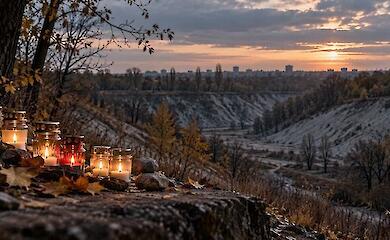
Babi Yar: what happened 85 years ago and how the memory of the victims has been preserved
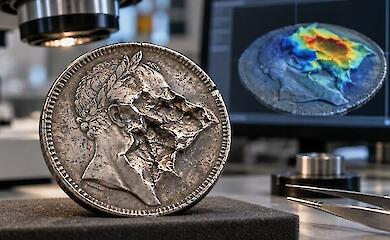
This 1834 six-penny coin was probably deformed during the minting process

How ‘Konstantinov Dar’ was passed off as an imperial decree for centuries

Popular news
Scientists have identified which childhood experiences are linked to happiness in adulthood

Russian forces struck a public bus in Kramatorsk: 30 dead and 18 injured


Marfan syndrome has been confirmed at the molecular level in domestic cats for the first time

A Russian drone struck the South Bridge in Kyiv: metro services have been suspended

News about war

Russia is plotting to assassinate the heads of European defence firms in order to undermine support for Ukraine — FT

Trump announced an energy truce between Ukraine and Russia. A similar statement was made a month ago
Russian forces struck a public bus in Kramatorsk: 30 dead and 18 injured
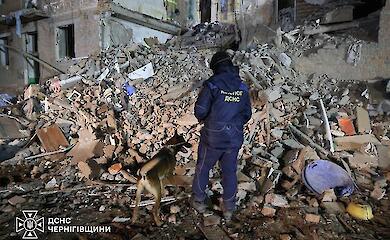
The death toll in Pryluky following the Russian missile strike has now risen to 22, including five children