


Friday the 13th and the full moon were no more dangerous than other days — scientists analysed 250,000 deaths


An analysis of more than 250,000 unexpected deaths in Ontario found no increased risk on Friday the 13th, during a full moon or on Halloween. The authors believe that belief in such links is largely fuelled by the confirmation bias.
Friday the 13th, the full moon and Halloween have long been shrouded in superstition, but the statistics do not support the idea that the risk of unexpected deaths is higher on such days.
Researchers from the University of Toronto analysed more than 250,000 cases in the Canadian province of Ontario over a 15-year period and found no significant increase in mortality on any of these ‘unlucky’ dates.
Details
The study was carried out by Jeffrey S. Rosenthal, a specialist in probability and statistical computing, and Jennifer M. Dmetrichuk, a forensic pathologist. The research was published in the journal CHANCE.
The authors examined all sudden deaths recorded in Ontario from 2009 to 2023 — more than 250,000 cases. The sample included homicides, accidents and sudden deaths from natural causes.
They compared the frequency of such deaths on Friday the 13th with that on other days. No statistically significant increase was found: the figure remained roughly the same and was even slightly below average. The authors also found no increase in the number of unexpected deaths during a full moon or on Halloween.
However, seasonal variations were indeed present. Unexpected deaths occurred more frequently in winter than in summer, and a distinct effect was observed during the Christmas period. The researchers attribute such fluctuations not to ‘bad luck’ but to common risk factors, including seasonal strain on the cardiovascular system.
The study has an important limitation: it analyses unexpected deaths in a single Canadian province and does not account for all possible events that a person might consider ‘bad luck’. Therefore, the results do not prove the absence of any possible influence of the moon on behaviour, but they do not provide grounds for considering Friday the 13th, a full moon or Halloween to be more dangerous in this respect.
Why this matters
The authors attribute the persistence of such superstitions to the confirmation bias. If an unfortunate event occurs on Friday the 13th, people are more likely to remember the coincidence and interpret it as confirmation of the superstition, whereas similar events on ordinary days do not receive the same attention.
The study demonstrates why it is important to test popular beliefs against large datasets. Even a deeply entrenched belief may seem convincing not because the effect actually exists, but because people are better at noticing instances that match their expectations.
Source
The main source is the study ‘Friday the 13th, Full Moons, and Holiday Blues: Ontario Death Date Distributions’, published in the journal CHANCE. Additional material is available from the University of Toronto and Phys.org.
Maria Grynevych, project manager, journalist, co-author of Guidebook Sacred Mountains of the Dnieper Region, Lecture Course: Cult Topography of the Middle Dnieper Region.
Related news
Why ‘zombie cells’ accumulate as we age: 5 findings from a new study


Counting to five revealed how children’s inner speech develops: 5 conclusions

Are you thinking quickly right now – or will fatigue get in the way more later on? 5 findings from the study

Same calories – different reactions: 5 insights into ultra-processed food

Popular news

Scientists have identified which childhood experiences are linked to happiness in adulthood
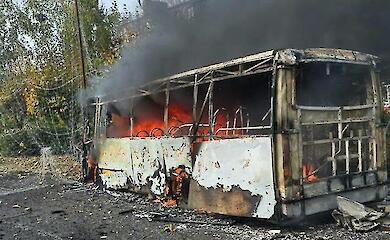
Russian forces struck a public bus in Kramatorsk: 30 dead and 18 injured


Marfan syndrome has been confirmed at the molecular level in domestic cats for the first time
A Russian drone struck the South Bridge in Kyiv: metro services have been suspended

News about war
Russia is plotting to assassinate the heads of European defence firms in order to undermine support for Ukraine — FT

Trump announced an energy truce between Ukraine and Russia. A similar statement was made a month ago
Russian forces struck a public bus in Kramatorsk: 30 dead and 18 injured
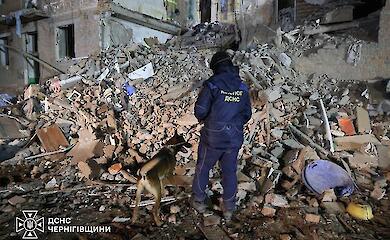
The death toll in Pryluky following the Russian missile strike has now risen to 22, including five children