

El Niño will change the winter in Europe: what to expect from the weather in 2026–2027


The first long-term forecasts for the winter of 2026–2027 suggest a possible shortage of snow across much of Europe. However, the forecast remains probabilistic at this stage: the most favourable conditions for snow cover are expected in the highlands and in the north of the continent.
The winter of 2026–2027 in Europe may see little snow. Initial long-term forecasts point to a shortage of snow in most regions of the continent, whilst the best conditions for snow cover are expected in the mountains, as well as in the north and north-east of Europe. This is due to the influence of the El Niño climate phenomenon, which is developing in the Pacific Ocean.
According to Stiripesurse, climatologists have assessed the latest developments related to this phenomenon and compared data from global long-range forecasting systems with historical observations.
Where snowfall may be lower
According to this assessment, snowfall this winter may be below the long-term average across much of Europe. The exceptions are likely to be high-altitude areas, primarily the Alps, as well as the colder regions in the north and north-east of the continent.
For ski resorts, altitude and geographical location may be particularly important factors. At altitudes above 1,800–2,000 metres, conditions may remain favourable enough for a stable snow cover to form.
In lowland and mid-altitude areas, the situation may be less favourable. The expected prevalence of mild Atlantic air masses is likely to bring precipitation, but at the same time raise temperatures, meaning that snow will fall less frequently or melt more quickly.
What December might be like
December is likely to be relatively snow-free in most of Europe’s lowland areas. However , the far north of the continent may prove to be an exception.
One possible factor is westerly and south-westerly air flows. These bring precipitation but are accompanied by relatively mild air. As a result, precipitation in some regions may not fall as snow.
What to expect in January
In January, according to this assessment, no significant change in the weather pattern is expected. A high-pressure system may persist over southern Europe, whilst a westerly air circulation will continue to influence most of the continent. In some regions, this may be accompanied by temperatures above the climatic norm.
At the same time, northern regions will be in a more favourable position in terms of snowfall.
February could be the month with the least snow
The most pronounced snow deficit is forecast for February. Although this month is usually among the snowiest in Europe, the prolonged persistence of a high-pressure system could lead to the opposite scenario.
The snow deficit may be particularly noticeable in central, western, north-western and southern Europe. At the same time, the north and north-east of the continent may retain more favourable conditions for snowfall.
El Niño does not mean a lack of snow
Experts are, however, urging people not to take the long-term forecast too literally. The phrase ‘below-average snowfall’ does not mean that there will be no snow at all in Europe. It refers to the likely amount of accumulated snow compared with long-term averages.
Elena Rasenko writes about science, healthy living and psychology news, and shares her work-life balance tips and tricks.
Related news

The EU has called on its international partners to step up financial support for Ukraine ahead of winter


Europe expects a powerful heat wave with possible temperature records - mass media

How northerners survive the six months of darkness: secrets of winter malaise from Norway, Sweden and Finland


Popular news

Scientists have identified which childhood experiences are linked to happiness in adulthood
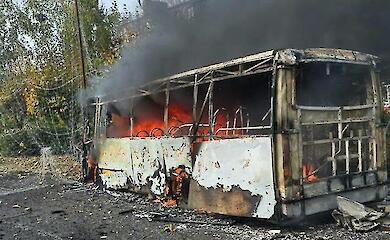
Russian forces struck a public bus in Kramatorsk: 30 dead and 18 injured


Marfan syndrome has been confirmed at the molecular level in domestic cats for the first time
A Russian drone struck the South Bridge in Kyiv: metro services have been suspended

News about war
Russia is plotting to assassinate the heads of European defence firms in order to undermine support for Ukraine — FT
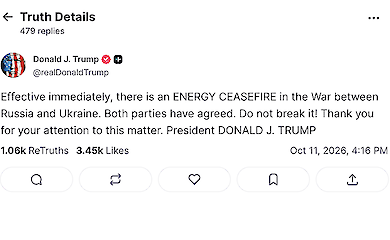
Trump announced an energy truce between Ukraine and Russia. A similar statement was made a month ago
Russian forces struck a public bus in Kramatorsk: 30 dead and 18 injured
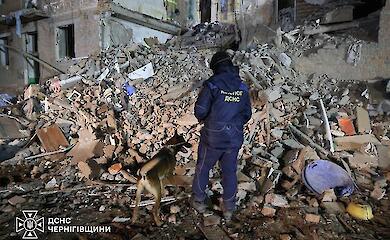
The death toll in Pryluky following the Russian missile strike has now risen to 22, including five children