

Egypt is set to send the Fayum portraits abroad for the first time: 6 facts


Egyptian and Italian conservators have restored a rare circular portrait of two young men dating from the 2nd century. The work was unveiled in Cairo ahead of the first overseas exhibition of Fayum portraits from Egyptian museums. We explain where and when to see the collection and why it is unique.
For the first time, Egypt is to lend a significant number of Fayum portraits from its museums to an exhibition abroad. Before they were sent to Italy, experts restored one of the most unusual exhibits — the circular ‘Portrait of Two Brothers’ from the 2nd century AD. The result of the three-week restoration was unveiled on 11 October 2026 at the Egyptian Museum in Cairo on Tahrir Square.
According to a report by the Associated Press on Phys.org, the portrait will form part of an exhibition in Rome featuring over 110 ancient artefacts. However, this is not a newly discovered painting: the artefact is already known to researchers, and the current news relates to its conservation and the first major overseas loan of the Egyptian collection.
Details
1. The ‘Portrait of Two Brothers’ was painted around 1,800 years ago
The painting, known as the ‘Tondo of the Two Brothers’ or the ‘Tondo from Antinopolis’, originates from Antinopolis in Middle Egypt. It is dated to the mid-2nd century AD — a time when Egypt was part of the Roman Empire. Unlike most surviving Fayum portraits, this one depicts two young men on a round wooden panel, rather than a single person.
They are traditionally referred to as brothers because of the similarity in their facial features, but this is a historical designation rather than a kinship proven by documentary evidence. The painter emphasised the individual features of their faces, skin tones and clothing. According to the exhibition organisers, such a well-preserved ancient portrait painting is a rare find.
2. The restoration took three weeks and required the wood to be reinforced
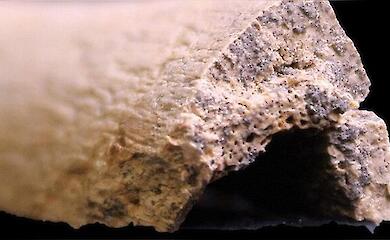
Restorers from the Egyptian Museum worked on the piece alongside specialists from Italy. The ancient wooden support had been damaged by wood-boring insects: cavities had formed inside, and in some areas the paint layer had lost its support. As the Italian news agency ANSA explains, at some edges of the damage, even slight pressure could have caused particles of paint to be lost.
The conservators reinforced the vulnerable areas, cleaned and stabilised the surface. This has made it easier to distinguish the facial features of the young man on the right and the details of his clothing. However, the process does not mean that the painting has been ‘repainted’: the aim of restoration is to preserve the original and restore the legibility of the surviving fragments.
3. The portrait was painted using pigments mixed with hot wax
‘The Tondo of the Two Brothers’ was painted using the encaustic technique—pigments mixed with hot wax. This material allows for the creation of dense layers of colour, transitions of light and shadow, and a lifelike texture to the face. Some other Fayum portraits were painted in tempera, so it is incorrect to claim that the entire tradition used only one technique.
According to Ahram Online, during an ultraviolet examination of the restored tondo, traces were observed in the hair of both figures. Researchers suggest that these may be remnants of an ancient transparent coating used to enhance the dark tones. For the time being, this is a preliminary interpretation rather than a confirmed chemical analysis of the varnish.
4. These portraits formed part of Egyptian burial rites
Fayum portraits were usually painted on thin wooden tablets and placed over the face of the deceased, secured amongst the mummy’s bandages. They combined the ancient Egyptian tradition of mummification with the artistic techniques of the Greco-Roman world. The name derives from the Fayum Oasis, where numerous examples have been found, although similar images are also known from other regions of Egypt.
These works depict people with hairstyles, jewellery and clothing typical of the Roman period. However, it is not possible to reliably determine a person’s character, exact biography or ethnic origin from a single portrait. Researchers examine them in conjunction with their archaeological context, materials and techniques.
5. Over 110 exhibits from several museums will be on display in Rome
The exhibition ‘The Power of the Portrait. Egypt and Rome. Faces of Fayum’ will take place at the Ara Pacis Museum in Rome. In addition to the museum’s own Egyptian collection, the organisers have brought together works from the Louvre, the Getty Museum, the Metropolitan Museum of Art and other collections.
The exhibition promises to feature painted wooden panels, painted burial shrouds, masks, marble portraits, plaster casts and ancient jewellery. ‘Portrait of Two Brothers’ will be one of the centrepieces. It is significant that this is the first time a large group of portraits from Egyptian museums has been sent outside Egypt; Fayum portraits have, of course, been held in foreign collections before.
6. The organiser and the museum give different start dates for the exhibition
The organiser’s website, MondoMostre, lists the period from 5 November 2026 to 2 May 2027. However, the official website of the Ara Pacis Museum states 6 November 2026 as the start date of the public exhibition and the same closing date – 2 May 2027. It is therefore advisable to check the available dates and times on the museum’s programme and ticketing page before visiting.
The venue is the Museo dell’Ara Pacis, Via di Ripetta, 180, Rome. This is a temporary exhibition: once it has ended, the exhibits, which have been loaned to the museum, must be returned to their respective collections.
Why this is important
The Fayum portraits are one of the rare collections of surviving ancient easel paintings. They offer a glimpse into how the people of Roman Egypt depicted the deceased and combined local funerary customs with the artistic traditions of the Mediterranean world. For the viewer, the opportunity to see works from different museums together is also valuable because the ancient wood and wax paintings remain extremely fragile.
The story of the ‘Tondo of the Two Brothers’ illustrates why large-scale exhibitions require prior conservation work and international cooperation. However, there is no scientific basis for declaring the restored painting a new archaeological discovery: the main events in October are the completion of the restoration and preparations for the exhibition. And details of the exhibition should be checked directly with the museum, given the discrepancy in dates.
Source
Hamza Fahmy / Associated Press, ‘Egypt’s Fayoum mummy portraits to travel abroad for the first time after restoration’, Phys.org, 11 October 2026. Egyptian State Information Service: completion of the Egyptian-Italian restoration, 11 October 2026. MondoMostre: exhibition programme; Museo dell’Ara Pacis: museum poster; ANSA: press conference materials on the restoration. Verified 12 October 2026.
An independent researcher, interested in archaeology and sacred geography. He researches them and writes about them.
Related news
The ‘King’ of the Iron Age may have been a woman: what ancient coins reveal


A lock from a ship that sank in 1583 was uncovered using tomography
Hundreds of ancient engravings in a tourist cave in Spain had gone unnoticed for decades

Geologists have not found the source of Stonehenge’s Altar Stone in the areas of Scotland they have investigated

Popular news

Genetic evidence of natural selection has been found in dogs near the Chernobyl Nuclear Power Station


A fish with a transparent head was filmed in 4K at a depth of 600 metres


News about war

Russia is threatening to destroy bridges, ports and power stations in Ukraine in order to secure territorial concessions from Kyiv – FT


Emergency power cuts have been introduced in Kyiv and warming centres are being set up — Klitschko


Zelenskyy confirmed that the Russian warning system had been hacked: Ukraine has responded to the Russian Federation’s cyberattack

Stephen Hubbard has returned to the US after four years in prison in Russia: what is known about his case