


Damaged teeth can still carry a stigma even after leaving street sex work


A qualitative study involving 21 women in Liverpool found that damaged or missing teeth can remain a visible marker of their past lives and exacerbate stigma even after they have given up drugs or left street sex work.
Damaged or missing teeth can remain a visible reminder of a difficult past even after a woman has stopped using drugs or engaging in street sex work. This was revealed by a qualitative study conducted by the University of Liverpool involving 21 women.
The participants reported that the appearance of their teeth often led those around them to assume they were still using drugs and to associate them with sex work, even though other aspects of their lives may have changed.
Details
The researchers examined the dental care needs, treatment experiences and priorities of people involved in street sex work living in conditions of extreme hardship. Participants were recruited through community support services in Liverpool. A total of 21 semi-structured interviews were conducted, using convenience sampling and the ‘snowball’ method.
The interview data were analysed using the Framework approach, identifying themes and codes. The researchers then translated the main themes into professional illustrations and discussed them with the participants, as well as running creative workshops. This format was used so that the women could refine the interpretation of their own experiences, rather than remaining merely the subjects of the research.
According to the participants, their dental problems arose against a backdrop of several interrelated factors: unstable housing, violence, poly-substance use, high sugar intake, dry mouth, vomiting and irregular dental care. Some spoke of broken or lost teeth, abscesses and constant pain.
Almost all participants reported significant barriers to accessing dental care. These included long waiting times, the cost of treatment, having to travel long distances, fear of the dentist, and missed appointments during times of crisis. As a result, care was often limited to emergency treatment, whilst restoring damaged or missing teeth proved significantly more difficult.
The study received ethical approval from the University of Liverpool. In the published abstract, the authors note that participants valued non-judgemental care and wished to receive not only pain relief but also comprehensive restorative treatment.
Why this is important
The results show that dental health can be not only a medical issue but also part of social stigma. Even after life changes, a person’s appearance may continue to link them to drugs, poverty or sex work, and prevent them from feeling that that previous stage of their life is truly behind them.
The authors consider mobile dental services, walk-in appointments and working through organisations that women already trust to be promising approaches. It is important to provide access not only to emergency care but also to ongoing restorative treatment, as well as a trauma-informed and non-judgemental approach.
The study has significant limitations. It is a small, qualitative study conducted in a single city with a non-random sample; therefore, the findings cannot be generalised to all people engaged in sex work. Nor does it prove that sex work itself causes dental problems: participants described a combination of poverty, unstable housing, violence, substance use and limited access to healthcare. At the time of publication, the main scientific findings are available as a conference abstract and in a university repository, rather than as a full-length article with an in-depth analysis.
Source
The main academic source is the abstract ‘Survival-based sex workers in Liverpool: Oral health needs, experiences and perspectives’ in the BASCD 2026 proceedings of the journal *Community Dental Health*. Additional materials have been published in the University of Liverpool repository. The researchers’ original material is available on Phys.org.
Maria Grynevych, project manager, journalist, co-author of Guidebook Sacred Mountains of the Dnieper Region, Lecture Course: Cult Topography of the Middle Dnieper Region.
Related news

Why ‘zombie cells’ accumulate as we age: 5 findings from a new study


Counting to five revealed how children’s inner speech develops: 5 conclusions

Are you thinking quickly right now – or will fatigue get in the way more later on? 5 findings from the study

Same calories – different reactions: 5 insights into ultra-processed food

Popular news

Scientists have identified which childhood experiences are linked to happiness in adulthood
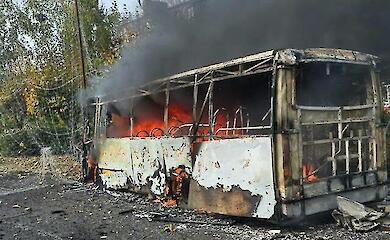
Russian forces struck a public bus in Kramatorsk: 30 dead and 18 injured


Marfan syndrome has been confirmed at the molecular level in domestic cats for the first time

A Russian drone struck the South Bridge in Kyiv: metro services have been suspended

News about war

Russia is plotting to assassinate the heads of European defence firms in order to undermine support for Ukraine — FT

Trump announced an energy truce between Ukraine and Russia. A similar statement was made a month ago
Russian forces struck a public bus in Kramatorsk: 30 dead and 18 injured
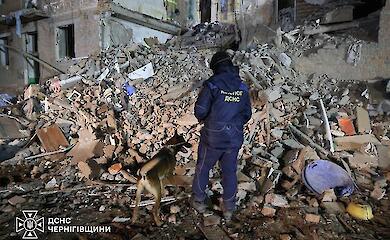
The death toll in Pryluky following the Russian missile strike has now risen to 22, including five children