

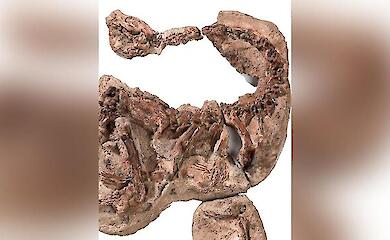
Copper from Spain may have reached Scandinavia as far back as the Bronze Age


Research into a Spanish mine has confirmed that copper was mined during the Late Bronze Age. The composition of the metal in 11 Scandinavian artefacts was found to be consistent with the ore from Las Minillas.
Copper from the Las Minillas mine in south-western Spain may have been used to make the bronze artefacts found in Scandinavia. The authors of a study published in the journal *Antiquity* compared the composition of the raw materials and the metal and found matches for 11 artefacts. New dating results have also confirmed that the mine was in operation during the Late Bronze Age.
Details
Archaeologists investigated the mine workings and the neighbouring residential area of Las Minillas in the province of Badajoz. Analysis of charcoal yielded 17 radiocarbon dates ranging from approximately 1350 to 750 BC. A total of 735 grooved stone mining hammers were documented at the site.
The combination of these dates, the large-scale mining operations and the numerous tools makes Las Minillas the largest of the excavated and reliably dated Late Bronze Age copper mines on the Iberian Peninsula, the researchers note.
The team compared the lead isotope ratios and the chemical composition of the local ore, slag and metal droplets with published data on more than 300 bronze artefacts from Scandinavia. Eleven artefacts showed results consistent with copper from Las Minillas. Such analysis helps to determine the possible origin of the raw material.
A conservative estimate of the total copper yield from the mine is around 197 tonnes. The authors view it as part of a wider mining system in southern Iberia, which may have supplied remote regions via sea routes along the Atlantic coast.
Why this is important
The findings add to our understanding of the trade in raw materials for bronze in ancient Europe. In the model proposed by the authors, Iberia participated in trade alongside other mining regions, rather than replacing them entirely.
However, the match in composition does not establish the exact route taken by the metal. Two Scandinavian artefacts are dated to a time after the last documented phase of the mine’s operation. Nor has it been established how many neighbouring mines were in operation simultaneously: further dating and analysis are required to verify the scale of the proposed network.
Source
Juan Latorre-Ruiz et al., ‘Iberian Copper and Bronze Age Europe: Late Bronze Age Mining and Supply at Las Minillas (Badajoz, Spain)’. The research article was published online in *Antiquity* on 26 October 2026.
The work was supported by the Riksbankens Jubileumsfond, the European Regional Development Fund and the European Social Fund.
An independent researcher, interested in archaeology and sacred geography. He researches them and writes about them.
Related news
The ‘King’ of the Iron Age may have been a woman: what ancient coins reveal

A lock from a ship that sank in 1583 was uncovered using tomography
Hundreds of ancient engravings in a tourist cave in Spain had gone unnoticed for decades

Geologists have not found the source of Stonehenge’s Altar Stone in the areas of Scotland they have investigated

Popular news

Genetic evidence of natural selection has been found in dogs near the Chernobyl Nuclear Power Station



A fish with a transparent head was filmed in 4K at a depth of 600 metres

News about war

Russia is threatening to destroy bridges, ports and power stations in Ukraine in order to secure territorial concessions from Kyiv – FT


Emergency power cuts have been introduced in Kyiv and warming centres are being set up — Klitschko


Zelenskyy confirmed that the Russian warning system had been hacked: Ukraine has responded to the Russian Federation’s cyberattack

Stephen Hubbard has returned to the US after four years in prison in Russia: what is known about his case