

Coca leaves have been found in Peru alongside sacrificed llamas


The surviving leaves help to verify the accounts of Spanish chroniclers regarding Inca rituals.
Archaeologists have discovered coca leaves amongst ritual offerings at Tambo Viejo — an Inca centre in the Acari Valley on Peru’s southern coast. Their association with sacrificial llamas and guinea pigs confirms the plant’s use in local rituals.
Details
A study by Lidio M. Valdez of the University of Calgary and his colleagues has been published in the journal Ñawpa Pacha. The authors compare archaeological finds with historical accounts of offerings to spirits and deities.
Spanish chroniclers reported that coca leaves were burnt. In Tambo Viejo, the leaves themselves have been preserved: this indicates a method of use that was not limited to burning.
In a separate, as yet unreviewed preprint, Valdés describes a group of nine young llamas. The animals were adorned with tassels and necklaces, placed in a pit, and covered with coca leaves and fragments of Spondylus shells. The offering was then covered with clean sand; traces of fire indicate a further stage of the ceremony.
Why this is important
Material finds allow us to verify chronicles by tracing the rituals themselves. They supplement written records, but do not imply that the methods of coca use described by chroniclers were not practised elsewhere.
The exact sequence of events and the meaning of the offering remain a matter of interpretation by researchers. It is not possible to reconstruct all the rituals of the empire from a single site. The details from the preprint should be regarded as preliminary.
Source
Lidio M. Valdés, Katrina J. Bettcher and M. Soledad Gutiérrez. ‘Coca Leaves in Inka Rituals at Tambo Viejo, Acarí Valley, Peru’. Ñawpa Pacha, 46(2), 203–223. Published online 7 September 2026. DOI: 10.1080/00776297.2026.2719320.
Preprint by Lidio Valdés on fire in the rituals of the Acarí Valley, version dated 14 July 2026. Not peer-reviewed.
Research in Tambo Viejo was funded by the Social Sciences and Humanities Research Council of Canada (SSHRC).
An independent researcher, interested in archaeology and sacred geography. He researches them and writes about them.
Related news
The ‘King’ of the Iron Age may have been a woman: what ancient coins reveal

A lock from a ship that sank in 1583 was uncovered using tomography
Hundreds of ancient engravings in a tourist cave in Spain had gone unnoticed for decades
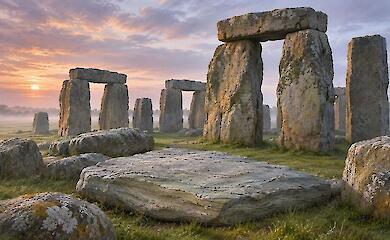
Geologists have not found the source of Stonehenge’s Altar Stone in the areas of Scotland they have investigated

Popular news

Genetic evidence of natural selection has been found in dogs near the Chernobyl Nuclear Power Station



A fish with a transparent head was filmed in 4K at a depth of 600 metres


News about war

Russia is threatening to destroy bridges, ports and power stations in Ukraine in order to secure territorial concessions from Kyiv – FT


Emergency power cuts have been introduced in Kyiv and warming centres are being set up — Klitschko


Zelenskyy confirmed that the Russian warning system had been hacked: Ukraine has responded to the Russian Federation’s cyberattack

Stephen Hubbard has returned to the US after four years in prison in Russia: what is known about his case