

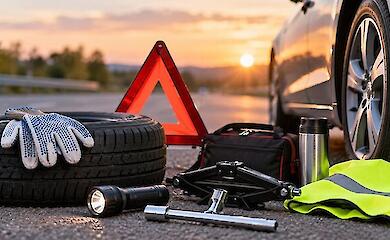
Buying a second-hand car: 9 checks to carry out before the sale


Buying a second-hand car requires not just one, but several different checks. We have put together a checklist based on the latest recommendations from the Main Service Centre of the Ministry of Internal Affairs of Ukraine and official online services.
A second-hand car has at least two histories: a technical one and a legal one. The good condition of the bodywork and engine does not guarantee the authenticity of the documents and the VIN, and an online VIN check is no substitute for a diagnostic check at a service centre.
Below is a checklist for buyers in Ukraine. It is based on the latest recommendations from the Ministry of Internal Affairs’ Main Service Centre and the Ministry’s official services; prices and terms for online services were verified on 13 September 2026.
Details
1. Verify the seller and the original documents
Check: who is selling the car, whether the person has the original registration certificate, and whether the vehicle’s details match those in the documents.
Do not rely solely on photographs of documents from the advert or a messaging app. The Ministry of Internal Affairs’ Main Service Centre warns that fraudsters may send scans, forged certificates and links to websites that merely imitate government resources.
2. Check the registration certificate on the Ministry of the Interior’s official website
Check whether the certificate in question was actually issued by a Ministry of Internal Affairs service centre.
On the official website of the Ministry of Internal Affairs’ Service Centre, you can check a vehicle registration certificate by its series and number. The service displays data from the Unified State Register of Vehicles without disclosing the owner’s confidential details.
3. Check the vehicle’s history by VIN in the Driver’s Portal
Check: the date of first and last registration, the number of previous owners, the make, model, year of manufacture and other available details.
The Ministry of Internal Affairs’ Driver’s Portal offers an official vehicle check service. As of 13 September 2026, up-to-date information on a vehicle based on its VIN code costs 54.82 UAH. The results can be downloaded as a PDF.
However, this online check is not the same as a full legal check of the vehicle: some information regarding seizures, liens and other encumbrances is not publicly available.
4. Check the VIN on the vehicle against the documents
Check whether the identification number on the vehicle matches the number in the registration document and whether there are any visually suspicious signs of tampering.
If the marking is damaged by corrosion or mechanical wear, do not attempt to touch up or ‘restore’ the characters yourself. The State Centre of the Ministry of the Interior warns that this may alter the original appearance of the marking and complicate any subsequent expert examination.
5. Do not buy a ‘check against all databases’ service advertised online or via messaging apps
Check whether the service is hosted on an official government domain and exactly what it actually promises to show.
The State Service Centre of the Ministry of Internal Affairs and the Cyberpolice issue separate warnings: there is no provision for a comprehensive remote vehicle check across all government registers. A PDF with official stamps, sent by an unknown intermediary, does not guarantee the absence of seizures, liens or other restrictions.
6. Have a technical inspection carried out at an independent garage
Check: the condition of the engine, transmission, suspension, brakes, steering, exterior lights, tyres, wheels, windows and electrical equipment.
The State Service Centre of the Ministry of the Interior explicitly recommends having the vehicle’s technical condition checked at a service centre before purchase. Such an inspection helps to identify faults, signs of accidents or substandard repairs. For safety-related components, official technical inspection procedures also include checks on the braking and steering systems, lights, tyres, wheels and the light transmission of the windows.
7. Do not confuse a service centre with an expert inspection by the Ministry of the Interior
Check the authenticityof the vehicle identification numbers and registration documents if you wish to minimise the risk of buying a car with altered markings or forged documents.
A standard service centre assesses the technical condition but does not verify the authenticity of the manufacturer’s markings. Ministry of Internal Affairs experts check the identification numbers, signs of alteration or forgery, compliance of the markings with requirements, and the authenticity of the registration documents.
For a second-hand car already registered in Ukraine, such an inspection is not mandatory during re-registration and is carried out on a voluntary basis. For the first state registration of a second-hand vehicle imported from abroad, it is mandatory.
8. Inspect the car in person before handing over any money
Check: whether the car is in the condition stated and whether it matches the documents and the advertisement.
The State Service Centre of the Ministry of Internal Affairs advises against transferring money without personally inspecting the car and completing the procedure required by law. Be particularly wary if the seller is pressuring you to act quickly, offering a price significantly below market value whilst at the same time insisting that they have already ‘checked the car against all databases’.
9. Complete the contract and re-registration formally
Check that the transfer of ownership is carried out in the prescribed manner andthat the car is actually re-registered in the new owner’s name.
In the guidelines issued by the State Service Centre of the Ministry of the Interior, the final stage is explicitly described as the conclusion of a contract of sale and the completion of re-registration at a Ministry of the Interior service centre. It is only through the official procedure that authorised staff gain access to restricted government data, which cannot be fully verified through a standard internet search.
Why this is important
The main mistake when buying a used car is trying to replace several different checks with just one. An online service shows part of the vehicle’s registration history, a service centre assesses its technical condition, and an expert inspection by the Ministry of Internal Affairs verifies the identification numbers and documents. These procedures address different issues.
Therefore, ‘the car has passed a diagnostic check’ does not mean that its documents and VIN are beyond dispute, and a good VIN report does not mean that the engine, brakes or bodywork are in good condition.
The minimum safe sequence is as follows: documents and the official online service → personal inspection → service centre → Ministry of Internal Affairs expert inspection (if necessary) → contract and official re-registration → payment. If the seller obstructs any of these checks, this in itself is a reason to walk away from the deal.
Source
- Ministry of Internal Affairs Main Service Centre: why a ‘visual’ inspection of a car is not enough before buying.
- Ministry of Internal Affairs Main Service Centre and Cyber Police: how to buy a car safely and avoid falling for a fake ‘database check’.
- Ministry of Internal Affairs Driver’s Portal: official vehicle check by VIN.
- Ministry of Internal Affairs Central Service Centre: vehicle registration certificate verification service.
- Ministry of Internal Affairs Main Service Centre: expert vehicle inspection and grounds for refusing registration.
Mykola Potyka has a wide range of knowledge and skills in several fields. Mykola writes interestingly about things that interest him.
Related news
Accessible driving school for veterans: 8 checks to carry out before submitting your application


‘Public transport is not a privilege’: Kyiv residents take to the streets to protest against fare rises


Good physical fitness reduces risk of dementia and depression - study

Popular news

Scientists have identified which childhood experiences are linked to happiness in adulthood

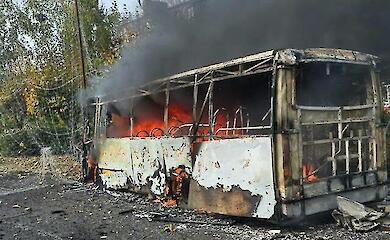
Russian forces struck a public bus in Kramatorsk: 30 dead and 18 injured


New Zealand has successfully restored populations of the country’s heaviest insect
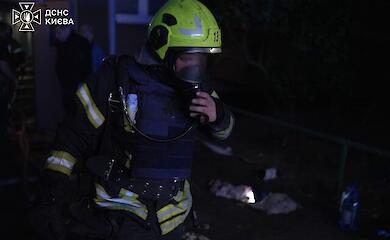
Russian ballistic missile strike on a thermal power station in Kyiv: what is known
News about war

‘There has been significant damage to energy infrastructure following attacks by the Russian Federation’ – Zelenskyy
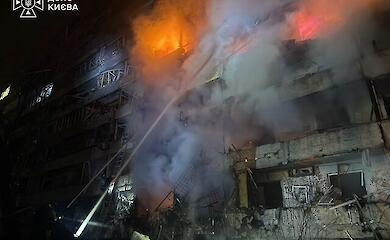
Russia has launched a ballistic missile strike on Kyiv: a residential building has been hit, and there are casualties and injured people
Russian ballistic missile strike on a thermal power station in Kyiv: what is known

Russia is plotting to assassinate the heads of European defence firms in order to undermine support for Ukraine — FT