
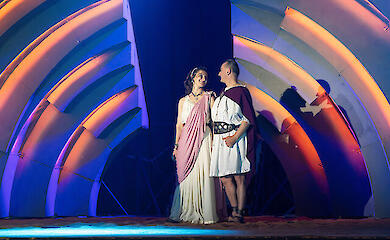

Bortnyansky’s opera *Creon* has been released on global streaming platforms for the first time

The first complete studio recording of Dmitri Bortniansky’s opera *Creon*, following 250 years of the work having been forgotten, was produced by Ukrainian artists.
The album has been released on international streaming platforms and is now available to listeners worldwide. It was released by the British label Toccata Classics. ‘Creon’ is now available on Spotify, Apple Music, YouTube Music, Amazon Music, Deezer and other platforms. International distribution was handled by Naxos Records.
This is the first time since Ukraine gained independence that a Ukrainian opera has been released as a complete studio recording for a global audience.
The release was recognised by international reviewers as one of the best of the month.
As conductor Herman Makarenko explained, the recording took place under extremely difficult conditions — during power cuts and without heating. It took three to four times longer than usual to record a single aria. Nevertheless, he said, the Ukrainian performers received high praise from their international partners for the quality of the recording.
“Bortniansky’s opera *Creon* is a masterpiece of European culture, written by a very young Ukrainian composer in Venice. He reinterpreted both Sophocles’ tragedy and Coltellini’s libretto. At that time, Viennese Classicism was already making its mark on the artistic scene, which is felt most clearly in the intonations of *Creon*, in the characters of the opera’s protagonists, and in their musical development,” noted Makarenko.

According to him, Bortniansky composed at the same time as Mozart; they studied in Bologna, Italy, under the same teachers.
“‘Creon’ holds a special place in the Ukrainian composer’s oeuvre: it is a work about freedom and values that are relevant today and should be heard in modern Europe, which is why we are bringing this work back to European audiences,” said Makarenko.
Toccata Classics: this recording will help rewrite music history
The British company Toccata Classics specialises in an undeservedly forgotten repertoire, introducing the general public to music that listeners may not be familiar with, but which they might enjoy if they had the opportunity to hear it, explained the company’s director, Martin Anderson.
“I have long been aware of the extraordinary richness of Ukrainian musical culture and had already been planning the ‘Ukrainian Music Project’, designed to draw attention to its finest examples. ‘Creon’ is precisely the release I had hoped to see as part of this project, and it is precisely this recording that will help us rewrite musical history,’ said Anderson.
According to him, very few operas from that era have survived in the modern theatre repertoire.
‘What do we know today from that period, apart from Mozart and Gluck? With the return of *Creon* to the stage, we have discovered in it a unique meeting point between the Baroque and Classicism. This opera also carries significant moral weight: the sequence of recitatives, arias and choruses convincingly affirms the principles of human dignity, whilst its final words call for the dawn of a new day. ‘Thus, *Creon* is not merely an interesting museum piece; it has something to say to the modern listener,’ Anderson believes.

Who recorded ‘Creon’?
The recording was made by a group of leading Ukrainian artists and musicians under the direction of the conductor and UNESCO Artist for Peace, Herman Makarenko — the creator of the project ‘The Return to the World of Dmytro Bortniansky’s First Opera, “Creon”’.
The recording featured the National Honoured Academic Choir of Ukraine ‘Dumka’, the National Presidential Orchestra, Olga Fomicheva, soloist of the National Opera of Ukraine and People’s Artist of Ukraine, Sergei Bortnik, soloist of the National Philharmonic of Ukraine, as well as other Ukrainian opera singers and musicians.
‘Creon’ has returned after almost 250 years
The project ‘The Return to the World of Dmitri Bortnyansky’s First Opera “Creon”’ began in 2024.
The opera was staged for the first time in Ukraine whilst Russia was waging a full-scale war against Ukraine. The first concert performance took place in November 2024, followed by the theatrical premiere in Chernivtsi in October 2025.
This is a joint international project to mark the 250th anniversary of the opera, carried out under the patronage of UNESCO.
Dmytro Bortniansky wrote *Creon* in Italy in 1776, when he was 25 years old. The premiere was a success at the Teatro San Benedetto in Venice. The opera is based on Sophocles’ *Antigone* and reflects the musical developments of the late 18th century.
The work subsequently disappeared from the repertoire and was considered lost for centuries. The manuscript was discovered in Portugal. In 2023, musicologist Olga Shumilina brought a copy of the score to Ukraine. This discovery provided the impetus for the opera’s return to the Ukrainian stage.
The Polish roots of the Bortniansky family
Bortniansky was born in 1751 in Hlukhiv, then the capital of the Hetmanate. However, his family on his father’s side hailed from Lemkivshchyna, a region that is now part of Poland.
The composer’s father, Stefan Shkurat, came from the Lemko village of Bortne (now Bartne in the Lesser Poland Voivodeship of Poland), which in the 18th century was part of the Polish-Lithuanian Commonwealth. He moved to the Hetmanate and, in Hlukhiv, adopted the surname Bortnyansky, derived from the name of his native village.
Thus, Bortnyansky’s connection to modern-day Poland lies in his paternal family origins and his ancestral village of Bortne. The composer himself was born in Hlukhiv and is identified in this project as a Ukrainian composer.
Where to listen to ‘Creon’:
Journalist, publicist, and expert on European integration and Ukrainian-Polish dialogue. Author for several Polish media outlets, including the weekly Polityka, the online platform Oko.press, and others.
Related news
Maestro Makarenko: “We have staged a contemporary opera about Ukrainian identity and the struggle for freedom”

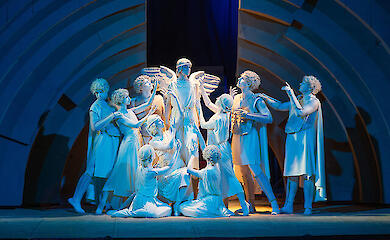
The Ukrainian opera *Creon*, which had been lost for 250 years, is to be staged on European stages
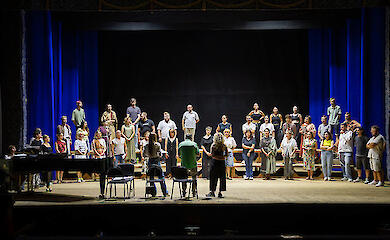
UNESCO Artist Makarenko’s ambitious project: to bring Bortnyansky’s *Creon* back to European stages
Zoomers and the return of “metal” in the 2020s: what happened to the first “digital generation”?

Popular news

Genetic evidence of natural selection has been found in dogs near the Chernobyl Nuclear Power Station



A fish with a transparent head was filmed in 4K at a depth of 600 metres


News about war

Russia is threatening to destroy bridges, ports and power stations in Ukraine in order to secure territorial concessions from Kyiv – FT

Emergency power cuts have been introduced in Kyiv and warming centres are being set up — Klitschko

Zelenskyy confirmed that the Russian warning system had been hacked: Ukraine has responded to the Russian Federation’s cyberattack

Stephen Hubbard has returned to the US after four years in prison in Russia: what is known about his case
