
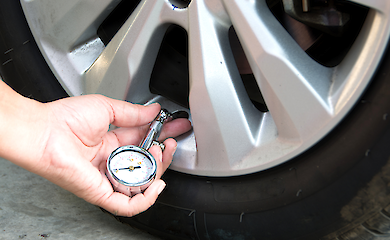

Before setting off on a long car journey: 9 things to check


Before setting off on a long journey, it is a good idea to check the vehicle’s condition, essential equipment and documents separately. We have put together a checklist based on the current Ukrainian Highway Code and the recommendations of the Patrol Police.
A long journey is not the best time to realise for the first time that you have a worn tyre, an empty windscreen washer reservoir or no warning triangle. Some of these checks are directly linked to the requirements of the Ukrainian Highway Code, whilst the rest are recommended by the Patrol Police as practical preparation for the journey.
In this list, we do not mix mandatory regulations with general advice. Where a requirement under the Road Traffic Regulations applies, this is indicated separately. There are no universal values for tyre pressure, fluid levels or service intervals: these must be checked against the manual for your specific vehicle.
Details
1. Inspect your tyres and check the pressure
Status: technical safety and vehicle roadworthiness requirements.
Before setting off, inspect all tyres for cuts, bulges and any noticeable uneven wear. For M1 category passenger cars, the minimum permissible tread depth is 1.6 mm. The traffic police also remind drivers that tyres must be suitable for the season and in good condition: worn tread increases the risk of aquaplaning on wet roads.
Check the tyre pressure according to the figure specified by the car manufacturer, rather than some arbitrary ‘universal standard’. This may vary depending on the model and load.
2. If your car hasn’t been serviced for a while — take it to a garage for a check-up
Status: recommendation from the Patrol Police.
Before a long journey, the police advise stopping off at a service centre to have the car checked and any faults rectified. This is particularly sensible if the car has not been serviced for a long time or if the driver has already noticed any irregularities in the operation of the brakes, steering or other systems.
In 2026, the Ministry of the Interior’s service centres specifically reminded motorists that roadworthiness tests check the braking system, steering, lights, tyres and wheels — in other words, precisely those components on which road safety directly depends.
3. Check the exterior lighting
Status: a requirement under the Highway Code.
Before setting off, make sure that your headlights, position lights, direction indicators, brake lights and hazard warning lights are all working. The Highway Code prohibits driving a vehicle if there are faults or if the external lighting does not meet the specified requirements.
In practice, it is easier to check your brake lights with the help of another person or by using a reflection on a wall or shop window, rather than discovering a fault whilst on the road.
4. Check the windscreen wipers and washer system
Status: a requirement under the Highway Code.
Faulty windscreen wipers and windscreen washers (where fitted as standard) are classified as faults that render the vehicle unroadworthy. The traffic police also advise keeping an eye on the condition of the windscreen and wiper blades, especially before travelling in wet weather.
Before setting off, check that the wiper blades clean the windscreen without leaving large uncleaned areas, and that there is sufficient windscreen washer fluid for the journey.
5. Check seat belts and child restraint systems
Status: mandatory safety requirements; a separate recommendation from the police before travelling.
The patrol police advise checking that the seatbelts are in good working order before a long journey. If children are travelling in the car, ensure in advance that suitable child restraint systems are used in the circumstances specified by the Highway Code.
It is best to carry out this check before loading luggage and seating passengers: the seatbelt must extend and lock properly and must not be trapped by luggage.
6. Ensure that the car is equipped with a first-aid kit, a fire extinguisher and a warning triangle
Status: compulsory equipment.
Ukrainian traffic regulations require a first-aid kit and a fire extinguisher. These must be secured in the locations specified by the manufacturer; if no such locations are provided, they must be kept where they can be accessed quickly. The traffic police also include a warning triangle as part of the mandatory road safety kit for long journeys.
Before setting off, it is worth not just making sure these items are ‘somewhere in the boot’, but checking the accessibility and condition of the fire extinguisher and first-aid kit.
7. Take a spare wheel or the manufacturer’s recommended tyre repair kit
Status: recommendation from the Patrol Police.
The police advise having a spare wheel or a special repair kit, if this is the solution specified by the car manufacturer. The equipment varies in modern cars: a repair kit may be provided instead of a spare wheel, so you need to check the specifications of your particular model.
If your car is fitted with standard tools for changing or temporarily repairing a tyre, check that they are present in advance.
8. Check your driving licence and insurance
Status: a legal requirement.
The driver must hold a driving licence of the appropriate category, the vehicle registration document and, where required by law, a valid compulsory third-party liability insurance policy. The law permits the use of electronic versions of these documents where provided for.
If the route crosses a border, the documentation and insurance requirements must be checked separately for the country of entry and transit: the standard Ukrainian set of documents may not be sufficient.
9. Check the route, weather, communications and fuel supply
Status: practical advice.
The patrol police advise checking the weather forecast before a long journey and, in the event of adverse conditions, postponing the journey if possible. Your mobile phone should be fully charged, and you should take a charger with you. For long journeys, the police also recommend taking a supply of water and food.
Before setting off, check your fuel or battery levels and note where you can top them up along the route. This is particularly important on long stretches with limited facilities or in bad weather.
Why this is important
The main idea behind this checklist is not to turn the driver into a mechanic, but to spot any obvious problems before setting off. A worn tyre, a faulty brake light or non-functioning windscreen wipers may seem like a minor issue in a car park but pose a serious risk on the motorway.
That said, a routine visual inspection is no substitute for a professional service. If you have any doubts about the performance of the brakes, steering, tyres or other critical systems, it is wiser to have the car checked at a garage before setting off. The patrol police explicitly recommend such a service before a long journey.
Part of the checklist is required by law, whilst another part is for preventative purposes. This distinction is important: for example, a first-aid kit and a fire extinguisher are part of the mandatory equipment, whereas a supply of water or a charger are part of your preparation in case of delays on the road.
Source
- Ukrainian Highway Code, Cabinet of Ministers Resolution No. 1306, current version.
- Ukrainian Patrol Police: recommendations before a long journey.
- Ukrainian Patrol Police: driving in the rain.
- Ministry of Internal Affairs of Ukraine: requirements for technical inspections of vehicles, including minimum tread depth.
- Ministry of Internal Affairs Service Centre: what is checked during a mandatory roadworthiness test.
Mykola Potyka has a wide range of knowledge and skills in several fields. Mykola writes interestingly about things that interest him.
Related news
Scientists have explained why a car you overtake catches up with you again


After customer complaints, BMW found a starter defect that leads to fire in worst case scenarios

Scientists have found that music can help with motion sickness - but not any kind of music


Popular news

Scientists have identified which childhood experiences are linked to happiness in adulthood
Russian forces struck a public bus in Kramatorsk: 30 dead and 18 injured


New Zealand has successfully restored populations of the country’s heaviest insect
Russian ballistic missile strike on a thermal power station in Kyiv: what is known
News about war

‘There has been significant damage to energy infrastructure following attacks by the Russian Federation’ – Zelenskyy
Russia has launched a ballistic missile strike on Kyiv: a residential building has been hit, and there are casualties and injured people
Russian ballistic missile strike on a thermal power station in Kyiv: what is known

Russia is plotting to assassinate the heads of European defence firms in order to undermine support for Ukraine — FT