
AI has helped us understand how Etruscan tombs might have instilled fear and a sense of disorientation

Archaeologists have combined 3D models, acoustic measurements and AI to simulate how people might have experienced two Etruscan tombs in Tarquinia. The results reveal starkly different sensory experiences — ranging from a calm visual experience to severe disorientation.
Archaeologists have attempted to reconstruct not only the appearance but also the possible sensory experiences of people inside two painted Etruscan tombs in Tarquinia, Italy. To do this, they combined 3D models, real-world acoustic measurements and artificial intelligence techniques.
The study shows that tombs dating from around the same period could have offered completely different sensory experiences: one was calmer and visually orderly, whilst the other was filled with echoes, sharp visual contrasts and a sense of disorientation.
Details
The work by Maurizio Forte and Jacqueline K. Ortoleva focuses on two Etruscan tombs from the 5th century BC – the Tomba del Gallo and the Tomba dei Demoni Azzurri. Both are located in the Monterozzi necropolis in Tarquinia and are decorated with scenes of feasts, music, processions and the afterlife.
The researchers created detailed 3D models of the chambers and utilised data from acoustic surveys. Inside the tombs, they played short pulse sounds and measured how quickly the echo faded and how the sound travelled between the chamber and the entrance corridor.
They then combined this data with an AI-based analysis of visual salience, modelling movement routes and the points most likely to attract the eye. Lighting was calculated based on candles rather than modern lighting.
In the small Tomba del Gallo, sound faded relatively quickly, and the space, according to the model, directed attention towards the frescoes and architectural transitions. The authors interpret such an environment as more tranquil and orderly.
The Tomba dei Demoni Azzurri is arranged differently. Its burial chamber is considerably larger, and sound lingered much longer in certain areas. The blue demon on the right-hand wall proved to be a particularly strong visual focal point. According to the model, the combination of echoes, limited light and a contrasting figure could have heightened a sense of tension and made spatial orientation more difficult.
The authors also compared these conditions with brain responses known from modern neuroscience. However, no one has, of course, measured the electrical activity of the ancient visitors’ brains: this involves modelling possible reactions, rather than providing direct evidence that people actually experienced specific states.
Why this is important
Etruscan tombs are usually studied primarily through their imagery and symbolism. This new work proposes viewing them as a holistic environment where meaning could be created simultaneously by architecture, light, sound, movement and wall paintings.
That said, the authors themselves emphasise the experimental nature of the method. It does not allow us to ‘reconstruct’ the subjective experience of a person from the 5th century BC, nor does it prove that the builders deliberately designed for acoustic or psychological effects. The model merely illustrates the sensory conditions created by the actual dimensions of the rooms, surfaces and images.
This approach may also be useful for other archaeological sites, where it is important to understand not only what people saw, but also how they moved, what they heard, and to what extent the space might have influenced their perception.
Source
Study: Maurizio Forte, Jacqueline K. Ortoleva, ‘Performing Power and Transitional Space: the Use of Acoustics and Multimodal AI in Etruscan Painted Tombs’, Journal of Archaeological Method and Theory, published 20 August 2026, DOI: 10.1007/s10816-026-09820-1. Original source: Phys.org.
An independent researcher, interested in archaeology and sacred geography. He researches them and writes about them.
Related news
Bones from ancient dwellings have revealed evidence of violence in Scandinavia

Egypt is set to send the Fayum portraits abroad for the first time: 6 facts
Coca leaves have been found in Peru alongside sacrificed llamas
Skulls from Egyptian royal tombs have pointed to human sacrifices
Popular news

Scientists have identified which childhood experiences are linked to happiness in adulthood

Russian forces struck a public bus in Kramatorsk: 30 dead and 18 injured


Marfan syndrome has been confirmed at the molecular level in domestic cats for the first time
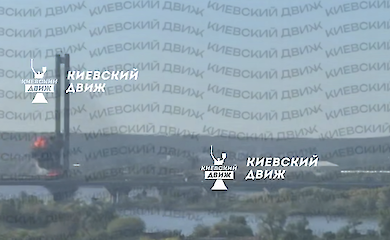
A Russian drone struck the South Bridge in Kyiv: metro services have been suspended

News about war

Russia is plotting to assassinate the heads of European defence firms in order to undermine support for Ukraine — FT

Trump announced an energy truce between Ukraine and Russia. A similar statement was made a month ago
Russian forces struck a public bus in Kramatorsk: 30 dead and 18 injured
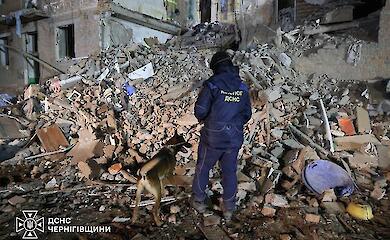
The death toll in Pryluky following the Russian missile strike has now risen to 22, including five children