

AI has helped to identify six new areas of anomalies at the boundary between the Earth’s core and mantle

Scientists have analysed more than 2 million seismograms using deep learning and have identified six previously undescribed zones of probable wave scattering at the boundary between the core and the mantle. The new map significantly expands coverage of the Earth’s deep regions, but does not show the precise contours of the hidden structures.
Researchers at the Chinese Academy of Sciences have used deep learning to analyse more than 2 million seismic records from 1990to 2024 and produced the most detailed global map to date of probable small-scale heterogeneities in the Earth’s lower mantle.
The analysis identified six previously undocumented zones where strong scattering of seismic waves is highly likely to occur near the core–mantle boundary, located approximately 2,900 km below the surface.
Details
The authors of the study investigated so-called PKP precursors — weak seismic signals that arise when earthquake waves scatter off small heterogeneities deep within the Earth. These signals are difficult to identify manually, so the researchers trained a system to detect them automatically in large datasets and then iteratively checked and corrected the results by hand.
The sample included more than 2 million waveforms from earthquakes of magnitude Mw 6.0 and above, recorded worldwide between 1990 and 2024. The system detected 174,929 PKP precursors — approximately ten times more than were contained in all previous global datasets combined.
Based on these signals, the researchers produced two probability maps: one shows how consistently precursors occur in different regions, whilst the other indicates where strong scatterers are most likely to be located. The expanded coverage has linked previously isolated observations into extensive bands.
Six new zones of high scattering probability have been identified beneath the North Atlantic, northern Eurasia, the South Atlantic, southern Africa, the Pacific Ocean and in the Antarctic region. Some of these regions coincide with independently identified zones of ultra-low seismic wave velocities, which serves as further validation of the method.
The authors suggest that some of these anomalies may be linked to remnants of ancient subducted lithospheric plates, localised partial melting and interactions with large regions of reduced velocities in the lower mantle. This is an interpretation of geophysical data, rather than a direct observation of rock composition.
The work was carried out by researchers at the Institute of Geology and Geophysics of the Chinese Academy of Sciences and supported by the National Natural Science Foundation of China.
Why this is important
The boundary between the solid mantle and the liquid outer core influences heat transfer from the Earth’s interior, mantle circulation and processes associated with the formation of deep mantle plumes. The more accurately small structures in this zone can be mapped, the better models of the planet’s evolution and internal dynamics can be tested.
However, the detected regions should not be regarded as six distinct features with already known shapes and compositions. The map shows probable scattering zones, rather than the precise boundaries of the structures. A single seismic trace does not allow the location of a scatterer to be determined unambiguously, and global coverage remains uneven due to the distribution of earthquakes and seismic stations.
The authors consider these regions to be priority targets for further research using several types of seismic waves and denser arrays of stations. Such data should help to refine the position, dimensions and possible nature of deep heterogeneities.
Source
Yurui Guan, Juan Li, Zhuowei Xiao, Wei Wang, Tao Xu. Global Distribution of PKP Precursors Derived From Three Decades of Seismic Data With Deep Learning. Journal of Geophysical Research: Solid Earth, 2026, 131, e2025JB033195. DOI: 10.1029/2025JB033195.
A popular science analysis from Phys.org was also used: Six unusual structures identified at Earth’s core-mantle boundary with the help of deep learning.
Mykola Potyka has a wide range of knowledge and skills in several fields. Mykola writes interestingly about things that interest him.
Related news

Could meditation reveal the secret of the universe? Physicists have put forward an unexpected theory


Why other people’s music drives us mad: scientists have identified five reasons

‘Don’t get dirty!’: how adults unwittingly spoil children’s games

Eye-catching fake news on social media catches the eye more quickly, but isn’t remembered any better
Popular news

Scientists have identified which childhood experiences are linked to happiness in adulthood

Russian forces struck a public bus in Kramatorsk: 30 dead and 18 injured


New Zealand has successfully restored populations of the country’s heaviest insect

Russian ballistic missile strike on a thermal power station in Kyiv: what is known
News about war
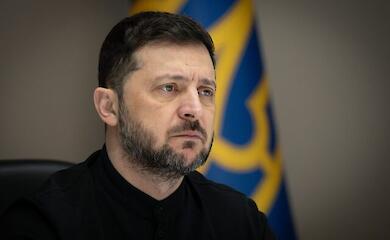
‘There has been significant damage to energy infrastructure following attacks by the Russian Federation’ – Zelenskyy

Russia has launched a ballistic missile strike on Kyiv: a residential building has been hit, and there are casualties and injured people
Russian ballistic missile strike on a thermal power station in Kyiv: what is known

Russia is plotting to assassinate the heads of European defence firms in order to undermine support for Ukraine — FT
