
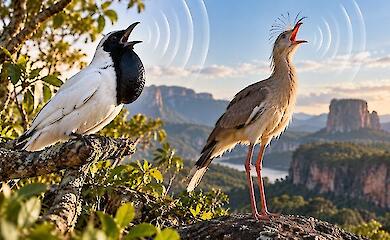

A new feathered dinosaur has shown that the ‘wings’ of dinosaurs and birds evolved differently


A new species of bird-like dinosaur, *Norellraptor barsboldi*, has been described in China. A comparison of its anatomy with that of early birds supports the hypothesis that similar elements of the flight apparatus evolved independently in these lineages and in different sequences.
Palaeontologists have described a new species of small feathered dinosaur from north-eastern China — *Norellraptor barsboldi*. The almost complete skeleton, measuring about 57 centimetres in length, has retained traces of plumage. Its anatomy has provided researchers with new evidence to investigate whether adaptations for flight in birds and their close relatives arose through a single evolutionary pathway.
The study was published on 29 September 2026 in the peer-reviewed journal *Nature Communications*. The authors concluded that, in microraptorines and the lineage leading to birds, similar features of the flight apparatus emerged in different sequences. This supports the scenario of several independent evolutionary pathways, rather than a single programme for the formation of a ‘flying’ body.
Details
The fossil comes from the Lower Cretaceous Jufotan Formation in the western part of Liaoning Province. The holotype, 130108-MHGU-F4281, is a complete skeleton with partially preserved feather impressions. The researchers have classified the animal as a Microraptorine – a group of small dromaeosaurids, close relatives of birds, some of whose members had long feathers on both their forelimbs and hindlimbs.
The Norellraptor skeleton is approximately 57 centimetres long. Histological analysis of the bones and the degree of their fusion indicates that the animal had already passed the juvenile stage. In the bone tissue of the radius, the authors identified two growth stops, suggesting that the dinosaur was at least several years old.
The main finding of the study stems not only from the description of the new species. The researchers reconstructed the sequence of the emergence of anatomical features associated with aerial locomotion on the evolutionary trees of microraptorines and birds. Around 30 per cent of the traits that arose during the evolution of microraptorines also appeared independently within the Avialae clade, which includes birds.
However, the order in which these characteristics appeared in the two lineages differed systematically. According to the authors, this does not fit a simple model in which both groups acquired a ready-made flying apparatus from a common ancestor, nor does it support the idea of a single, hidden developmental programme that forced the two lineages to undergo identical stages.
The study does not prove that Norellraptor flew in the same way as modern birds. The plumage has been preserved only in fragments, and the authors explicitly note that it is difficult to determine its exact length and detailed morphology. Asymmetrical contour feathers were likely present on the forelimbs, but the animal’s functional capabilities are reconstructed indirectly based on a complex of anatomical features.
The study is also limited by the available fossil material and the chosen phylogenetic reconstruction. The authors believe that further finds and data on bone growth are needed to verify the extent to which the observed pattern is characteristic of other branches of bird-like dinosaurs.
Why this is important
Microraptorines have long played an important role in the debate on the origin of flight. They were close relatives of birds and possessed a whole range of similar adaptations; therefore, their external resemblance could be explained by inheritance from a common ancestor, shared developmental patterns, or independent adaptation to aerial locomotion.
Norellraptor allows us to compare not just the presence of individual ‘avian’ features, but the sequence in which they appeared. Different sequences show that a similar final set of characteristics does not necessarily imply the same evolutionary path.
Therefore, the discovery does not mean that scientists have completely revised their understanding of the origin of birds or that a new direct ancestor has been found. The findings are more specific: they strengthen the case that aerodynamic adaptations arose repeatedly and independently in different members of Paraves.
Source
Xuri Wang, Yannan Ji, Andrea Cau, Martin Kundrát and co-authors. “Independent assembly of the flight apparatus in a non-avian dinosaur clade”. Nature Communications, 17, Article 10074 (2026). DOI: 10.1038/s41467-026-77804-6. The article is available as open access.
Nature Publishing Group news item: Phys.org.
Mykola Potyka has a wide range of knowledge and skills in several fields. Mykola writes interestingly about things that interest him.
Related news
Scientists have put forward an explanation as to why there were no tiny dinosaurs


The rock had been kept in the museum for 30 years — it turned out to contain the bones of a mosasaur
Popular news

Scientists have identified which childhood experiences are linked to happiness in adulthood


Russian forces struck a public bus in Kramatorsk: 30 dead and 18 injured

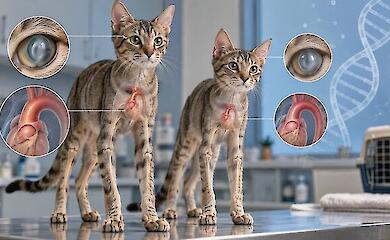
Marfan syndrome has been confirmed at the molecular level in domestic cats for the first time

A Russian drone struck the South Bridge in Kyiv: metro services have been suspended
News about war

Russia is plotting to assassinate the heads of European defence firms in order to undermine support for Ukraine — FT

Trump announced an energy truce between Ukraine and Russia. A similar statement was made a month ago
Russian forces struck a public bus in Kramatorsk: 30 dead and 18 injured

The death toll in Pryluky following the Russian missile strike has now risen to 22, including five children