


A model has shown why increasing police presence could lead to more thefts from museums


The economic model describes a paradox: improvements in policing may prompt museums to cut back on their own security spending, which could then lead to an increase in the equilibrium level of theft. The authors propose targeting black market buyers, setting minimum security standards and increasing penalties. This is a theoretical finding from a 2016 article, not evidence that increased policing has already led to a rise in actual thefts.
The more effectively the police solve art thefts, the safer museums should become. However, the economic model developed by Frederick Chen and Rebecca Rigan suggests the opposite outcome: museums may scale back their own security, relying on state resources, and thereby make new thefts more attractive.
The authors have described the strategic interaction between museums and thieves using game theory. Their conclusion does not imply that effective policing in itself breeds crime: the paradox arises only under certain responses from museums and other assumptions of the model.
Details
A museum decides how much to spend on security, alarm systems and other protective measures. A thief assesses the probability of success, the punishment and the potential profit. The police influence the calculations of both parties, as the likelihood of solving the crime and recovering the stolen goods depends on their effectiveness.
If the authorities become more successful at investigating art thefts, the museum gains additional protection for which it does not pay directly. In the model, this may prompt the museum to reduce its private expenditure on security. If the reduction is substantial enough, the overall probability of theft will increase, despite the police being more effective.
This mechanism is similar to crowding out: public protection partially displaces the museum’s own security measures. This is not an inevitable outcome, but rather one of several possible equilibria, where each party’s decisions depend on the expected actions of the others.
The value of a painting to the museum and its price on the black market also differ. A world-famous masterpiece may be almost impossible to sell openly, so its black-market value does not necessarily rise in line with its cultural or insurance value.
Consequently, the model does not predict a simple correlation between the value of an exhibit and the level of its security. A museum may take extra measures to protect a work because of the damage caused by its loss, whilst a criminal may consider the same object unprofitable due to difficulties in selling it.
The paper proposes several ways to reduce this risk. Exerting pressure on black-market buyers and intermediaries reduces the thief’s expected profit, thereby denying the museum such a direct incentive to cut back on security.
Another option is mandatory minimum security standards. These limit a museum’s ability to offset improvements in policing by cutting its own costs. The authors also show that, within the model, increasing penalties does not raise the equilibrium level of theft and may encourage additional security measures.
Why this matters
The study shows that security measures cannot be assessed in isolation. Changes in policing can influence the decisions of museums, insurers, dealers and criminals, and the overall effect will depend on the response of the entire system.
The practical conclusion is not that we should abandon a strong police force, but rather that we should combine investigations with basic requirements for museum security and measures to tackle illegal demand. In this way, improved state protection should not replace local prevention efforts.
However, the model does not confirm that such an effect is already evident in real-world data. To verify this, information would be required on museums’ security expenditure, crime clearance rates and the number of thefts before and after changes in law enforcement practices.
There is also a temporal caveat: the original article was published online in March 2016 and appeared in the journal’s 2017 issue. The Phys.org article in 2026 brought the old finding back into the current debate, but it does not report on any new research nor does it analyse recent robberies as an empirical sample.
Source
Frederick Chen, Rebecca Regan. Arts and craftiness: an economic analysis of art heists. Journal of Cultural Economics, 2017, 41, 283–307. Published online on 11 March 2016. DOI: 10.1007/s10824-016-9269-6.
Further context: ‘The art heist paradox: Why better police work can lead to more stolen masterpieces’, Phys.org, 18 September 2026.
Maria Grynevych, project manager, journalist, co-author of Guidebook Sacred Mountains of the Dnieper Region, Lecture Course: Cult Topography of the Middle Dnieper Region.
Related news

Law No. 4963-IX has come into force: what’s changing for the green energy sector

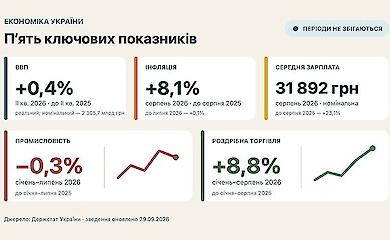
The State Statistics Service has updated Ukraine’s key economic indicators

Salaries have jumped by 22 per cent, whilst construction output has fallen by 8 per cent: what is happening to Ukraine’s economy?


Wallerstein vs. Zeihan: is globalisation dying, or changing its state of matter?

Popular news

Genetic evidence of natural selection has been found in dogs near the Chernobyl Nuclear Power Station



A fish with a transparent head was filmed in 4K at a depth of 600 metres

News about war
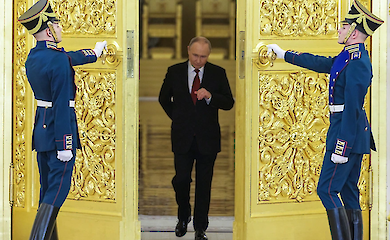
Russia is threatening to destroy bridges, ports and power stations in Ukraine in order to secure territorial concessions from Kyiv – FT


Emergency power cuts have been introduced in Kyiv and warming centres are being set up — Klitschko


Zelenskyy confirmed that the Russian warning system had been hacked: Ukraine has responded to the Russian Federation’s cyberattack

Stephen Hubbard has returned to the US after four years in prison in Russia: what is known about his case