


A manuscript from 1666 linked the four-lens telescope to Galileo


A detailed description of a four-lens telescope, referred to as ‘Galileo’s instrument’, has been found in a manuscript dating from 1666. The author of the study emphasises that the attribution remains, for the time being, a hypothesis.
The historian José María Moreno Madrid has discovered a previously unknown description of a four-lens telescope, which is described in a 17th-century manuscript as having been constructed by Galileo Galilei. If this attribution is correct, experiments with this optical design began no later than 1630 — approximately 13–15 years earlier than previously thought.
The discovery does not conclusively prove Galileo’s authorship. It is based on a single entry made several decades after the instrument’s supposed construction, and the telescope itself has not yet been found.
Details
Moreno Madrid studied the manuscript *Observationes Diversarum Artium*, which the Spanish Dominican friar Ignacio Muñoz compiled in Mexico City. The section entitled *De Tellescopiis Stellarum* is dated 8 August 1666 and contains a detailed description of the instrument’s components, along with drawings and measurements.
Muñoz used the Latin phrase *fabricatum a Galilaeo* — ‘made by Galileo’. He described a converging four-lens terrestrial telescope with a system that produced a right-side-up, rather than an inverted, image. The text also specifies the relative positions of the convex lenses.
The instrument was presented to Muñoz by the Viceroy of New Spain and Marquis of Mancera, Antonio Sebastián de Toledo Molina y Salazar. The viceroy wished to test the scientific abilities of the monk, who had proposed a project to the Spanish King Philip IV to improve maritime navigation.
Historical sources report that Galileo presented Philip IV and his wife with three telescopes; however, their optical design is unknown. The researcher suggests that one of these instruments may later have come into the possession of the Marquis of Mancera through his connections with the Spanish court.
Why this is important
Until now, the earliest four-lens telescopes were generally dated to around 1643–1645. The new record suggests that Galileo or those around him were already testing such a system as early as 1630. This differed from the better-known ‘Galilean telescope’ with a convex objective lens and a concave eyepiece.
The document is valuable even setting aside the disputed attribution: it provides a rare, detailed technical description of a 17th-century telescope and shows that such instruments served not only as scientific tools but also as prestigious diplomatic gifts.
Further documentation or the instrument itself is required to confirm a connection with Galileo. None of the eight surviving telescopes from the first half of the 17th century can be indisputably identified as his work, and the two Florentine examples, traditionally associated with the scientist, are also of disputed attribution.
Source
Study: José María Moreno Madrid, *De Tellescopiis Stellarum* (1666). ‘Was Galileo experimenting with four-lens terrestrial telescopes by 1630?’, *Annals of Science*, 2026. DOI: 10.1080/00033790.2026.2661195.
A description of the work and bibliographic details have been published in the University of Limerick’s repository. Further details regarding the discovery are provided by the university’s press office.
Maria Grynevych, project manager, journalist, co-author of Guidebook Sacred Mountains of the Dnieper Region, Lecture Course: Cult Topography of the Middle Dnieper Region.
Related news
The 1381 Uprising: why the rebels declared their loyalty to the king


Babi Yar: what happened 85 years ago and how the memory of the victims has been preserved
This 1834 six-penny coin was probably deformed during the minting process
How ‘Konstantinov Dar’ was passed off as an imperial decree for centuries

Popular news

Scientists have identified which childhood experiences are linked to happiness in adulthood

Russian forces struck a public bus in Kramatorsk: 30 dead and 18 injured


Marfan syndrome has been confirmed at the molecular level in domestic cats for the first time

A Russian drone struck the South Bridge in Kyiv: metro services have been suspended

News about war

Russia is plotting to assassinate the heads of European defence firms in order to undermine support for Ukraine — FT
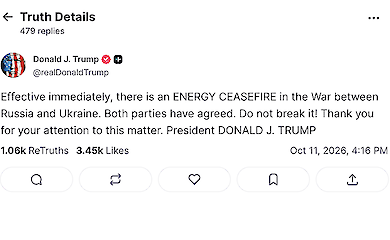
Trump announced an energy truce between Ukraine and Russia. A similar statement was made a month ago
Russian forces struck a public bus in Kramatorsk: 30 dead and 18 injured

The death toll in Pryluky following the Russian missile strike has now risen to 22, including five children