

9 mistakes made when measuring pressure that can significantly distort the result


Even a properly functioning blood pressure monitor can give an inaccurate reading if you take a measurement immediately after drinking coffee, whilst talking, or if you are not sitting correctly. The Public Health Centre of the Ministry of Health of Ukraine has identified factors that can alter readings by tens of mm Hg.
Details
All error ranges in this section are taken from the recommendations of the Public Health Centre of the Ministry of Health of Ukraine, published on 17 July 2026.
1. Coffee, strong tea, energy drinks or nicotine before measurement
Caffeine and nicotine can temporarily raise blood pressure readings. The Public Health Centre states that the difference can be as much as 20 mm Hg. It is therefore recommended that you do not smoke or consume coffee, energy drinks or strong tea for at least 30 minutes before taking a reading.
2. Taking a reading in a cold room
Cold causes blood vessels to constrict and may raise blood pressure during the measurement. If a person has just come in from the cold or is in a cold room, the result may not reflect their usual condition.
3. A full bladder
This is no trivial matter: according to the Centre for Public Health, discomfort caused by a full bladder can raise readings by up to 33 mm Hg. It is best to go to the toilet before taking a reading.
4. Back without support or feet not flat on the floor
If you sit without back support or dangle your feet, the reading may be 5–10 mm Hg higher. A chair with a backrest is suitable for the measurement, and both feet must be flat on the floor.
5. Crossed legs
The habitual ‘leg-over-leg’ posture also affects the result. The Centre for Public Health indicates that this may lead to a reading that is up to 15 mm Hg higher. It is best not to cross your legs whilst taking the measurement.
6. Arm hanging down or below heart level
If your arm is not resting on a table and is below heart level, the reading may be up to 20 mmHg higher. You should relax your forearm and rest it on a stable surface at approximately heart level.
7. The cuff is worn over clothing
A shirt sleeve, jumper or other fabric between the skin and the cuff can significantly distort the reading. Depending on the thickness of the fabric, the Centre for Public Health gives a range of possible error from 5 to 50 mm Hg. The cuff should be placed directly on the bare arm.
8. The cuff is the wrong size
A cuff that is too small may overestimate blood pressure by 2–11 mmHg, whilst one that is too large may underestimate it by approximately 5–10 mmHg. The size must correspond to the circumference of the upper arm. The international STRIDE BP list specifies, for each model of blood pressure monitor, the cuff sizes for which it has been validated.
9. Talking during the measurement
Talking stimulates the cardiovascular system and can increase the reading by up to 19 mm Hg. It is best not to talk, answer phone calls or discuss the readings whilst the measurement is in progress.
Why this is important
A single measurement is a snapshot of your condition at a specific moment, not a diagnosis. The American Heart Association recommends using a validated automatic blood pressure monitor with an upper-arm cuff, sitting quietly for at least five minutes, remaining silent, keeping your back supported, feet flat on the floor, and your arm at heart level, and to take two readings approximately one minute apart.
A home blood pressure diary helps your doctor assess trends, but it does not replace a consultation and should not be used as a basis for starting, stopping or changing the dose of prescribed medication on your own.
If, upon retaking the measurement, your blood pressure remains above 180/120 mm Hg, you require urgent medical assessment. If you simultaneously experience chest pain, shortness of breath, severe weakness or numbness, or impaired vision or speech, the American Heart Association considers this a possible hypertensive emergency. In Ukraine, you can call 103 or 112 for emergency medical assistance.
For pregnant women, children and people with certain heart rhythm disorders, it is important to use a device that has been specifically validated for the relevant group and to discuss a home monitoring plan with a doctor.
Source
- Public Health Centre of the Ministry of Health of Ukraine: ‘How to measure blood pressure correctly: what affects the quality of results’, 17 July 2026.
- Public Health Centre of the Ministry of Health of Ukraine: Hypertension and home blood pressure monitoring.
- American Heart Association: Home Blood Pressure Monitoring, updated 14 August 2025.
- STRIDE BP: international list of validated blood pressure monitors.
- European Society of Cardiology: 2024 Pocket Guidelines on Elevated Blood Pressure and Hypertension.
- Ukrainian Government Contact Centre: call 103 or 112 for emergency medical assistance.
Elena Rasenko writes about science, healthy living and psychology news, and shares her work-life balance tips and tricks.
Related news
Instructions for an over-the-counter medicine: eight checks before taking it

Popular news

Scientists have identified which childhood experiences are linked to happiness in adulthood


Russian forces struck a public bus in Kramatorsk: 30 dead and 18 injured


A Russian drone struck the South Bridge in Kyiv: metro services have been suspended


New Zealand has successfully restored populations of the country’s heaviest insect
News about war

‘There has been significant damage to energy infrastructure following attacks by the Russian Federation’ – Zelenskyy

Russia has launched a ballistic missile strike on Kyiv: a residential building has been hit, and there are casualties and injured people
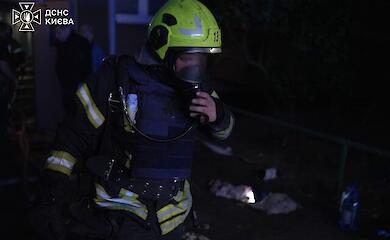
Russian ballistic missile strike on a thermal power station in Kyiv: what is known
Russia is plotting to assassinate the heads of European defence firms in order to undermine support for Ukraine — FT