
112 degrees against forgeries: scientists have discovered a new test for ancient pottery


Researchers at UC San Diego have proposed analysing ancient clay pottery for a magnetic signature that accumulates after firing. In their experiments, samples dating back over a thousand years required heating to above 112°C to erase this late-stage magnetic signal, whereas modern samples lost it at lower temperatures.
Ancient pottery has been found to bear a magnetic ‘trace of time’ that could help distinguish a genuine antique from a modern forgery. Researchers at the Scripps Institution of Oceanography at the University of California, San Diego, have proposed testing the temperature at which the magnetisation accumulated after the initial firing disappears.
In experiments, samples over a thousand years old retained this later magnetic signal up to temperatures above 112°C, whereas modern objects lost it earlier. However, this is not a universal ‘forgery test’ nor a method for determining an object’s exact age: the method should be used to complement other forms of analysis.
Details
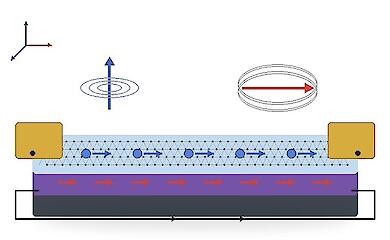
Fired clay can indeed retain a magnetic history. When a vessel or figurine is removed from the kiln and the material cools, some of the magnetic grains within the clay lock in the direction of the Earth’s magnetic field at that time. This stable signal is known as thermoremanent magnetisation.
But the magnetic record does not end there. Smaller particles continue to react slowly to the Earth’s magnetic field even after the object has been made. Over the years and centuries, an additional, weaker signal emerges — the so-called viscous remanence. In layman’s terms, it can be thought of as a magnetic trace that gradually accumulates as the object ages.
It is precisely this later trace that the researchers use for testing. The samples were heated starting at 50°C, with the temperature gradually increased. The younger the object, the easier it is to erase the signal that has accumulated since firing. For samples over a thousand years old, the team identified a threshold: their late magnetisation only disappeared at temperatures above 112°C, whereas for modern objects, it disappeared at a lower temperature.
This threshold was not simply plucked out of thin air. The researchers supplemented their laboratory measurements with micromagnetic modelling, in which they calculated how such a signal should accumulate in clay over time. It was precisely this combination of experiments and modelling that enabled them to identify the 112°C benchmark.
The method is primarily designed for ceramics believed to be genuinely ancient – around a thousand years old or older. It does not reveal the exact year of manufacture. Furthermore, for more recent authentic artefacts and for older forgeries produced tens or hundreds of years ago, the 112°C threshold no longer provides such a straightforward answer. The authors therefore regard magnetic analysis as a supplementary tool, rather than a substitute for archaeological, materials science and historical expertise.
Why this is important
The problem of fake antiquities affects more than just the antiques market. An object of dubious provenance may find its way into a museum collection and subsequently be used by historians as evidence of real events, technologies or religious practices. If the item is a forgery, the error begins to affect not just the price of the lot, but scientific conclusions as well.
What makes this new approach interesting is that it looks not for decorative features or stylistic similarities to the period, but for the physical traces of time within the fired clay itself. This makes it potentially useful for museums, archaeologists and authorities investigating the illicit trade in antiquities.
The authors intend to test the method on museum objects whose authenticity has long been disputed. They also suggest that magnetic measurements could provide additional evidence in legal proceedings concerning forgeries. However, the reliability of the method across different types of clay, for different ages and storage conditions, still needs to be tested on a wider range of artefacts.
Source
Phys.org, 31 August 2026: A 112°C test may separate 1,000-year-old pottery from recent forgeries.
UC San Diego / Scripps Institution of Oceanography: Researchers Develop Method to Tell Authentic Artifacts from Fakes.
Scientific publication: Yoav Vaknin, Lisa Tauxe, Brendan Cych, Jeff Gee, ‘Viscous Remnant Magnetisation (VRM) Authentication Method for Archaeological Artefacts’, *Proceedings of the National Academy of Sciences* (PNAS), 2026.
Maria Grynevych, project manager, journalist, co-author of Guidebook Sacred Mountains of the Dnieper Region, Lecture Course: Cult Topography of the Middle Dnieper Region.
Related news
The letters have shed light on the role of Baghdad’s merchants in the history of ancient Kish

Bones from ancient dwellings have revealed evidence of violence in Scandinavia


Egypt is set to send the Fayum portraits abroad for the first time: 6 facts

Coca leaves have been found in Peru alongside sacrificed llamas
Popular news

Scientists have identified which childhood experiences are linked to happiness in adulthood

Russian forces struck a public bus in Kramatorsk: 30 dead and 18 injured


A Russian drone struck the South Bridge in Kyiv: metro services have been suspended


New Zealand has successfully restored populations of the country’s heaviest insect
News about war

‘There has been significant damage to energy infrastructure following attacks by the Russian Federation’ – Zelenskyy

Russia has launched a ballistic missile strike on Kyiv: a residential building has been hit, and there are casualties and injured people

Russian ballistic missile strike on a thermal power station in Kyiv: what is known

Russia is plotting to assassinate the heads of European defence firms in order to undermine support for Ukraine — FT